

Despite advancing with combined votes of 107-0 through three-fourths of the legislative process, HB 4227 to eliminate Oklahoma’s statute of limitations for the prosecution of child sex crimes appears stalled in the State Senate for unclear reasons.
According to the bill’s Senate author, Senate Floor Leader Julie Daniels has declined to hear the measure, which would also prohibit the use of non-disclosure agreements in child sexual abuse cases.
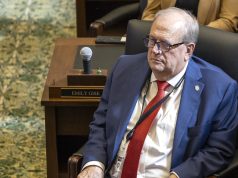
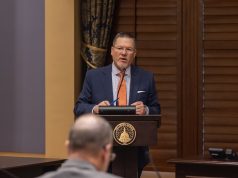
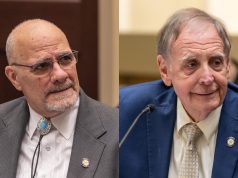
“I’ve just been told they’re not going to hear it. No reason,” Sen. Darrell Weaver (R-Moore) said Tuesday. “I am baffled. Disappointed and baffled.”
Daniels declined to discuss HB 4227’s fate Monday.
“I have nothing to say right now that could be of help to you,” said Daniels (R-Bartlesville). “So when I know something, I’ll let you know.”
Asked if she had read the bill and has concerns, Daniels asked a question in return.
“You’re asking me if I have not read a bill? Yes, I’ve read the bill,” she said without elaborating on her opinion of it.
Weaver, who said Daniels also declined to discuss her specific concerns with him, said he had not spoken with President Pro Tempore Lonnie Paxton about HB 4227.
“It’s my understanding he’s deferring those decisions to her,” Weaver said.
On Monday, Paxton (R-Tuttle) said he would need to review the bill before discussing whether it would be heard. Asked for clarification Tuesday, Paxton’s communications director said he was “not sure if he’s going to comment on it right now.”
With Oklahoma standing as one of only six states that still has a statute of limitations for child sex crimes, the silence has left Weaver frustrated.
“I think the bill needs to be heard,” he said. “I’ve expressed that, and I’m hoping for a miracle that maybe it will be heard somehow. But we’re sure running out of time. It’s so late in the game.”
Both the House and Senate are expected to finish considering policy bills Thursday, with a resolution approved by each chamber specifying a return Thursday, May 14, to consider potential veto overrides and recognize legislative staff.
“It truly is unfortunate,” Weaver said. “I’ve got two other bills sitting out there I’m trying to push, too, but this is my top priority.”
Others decry ‘incomprehensible’ scenario

As Americans grapple with how Jeffrey Epstein evaded prosecution on serial sexual abuse allegations for decades, Oklahoma’s HB 4227 received strong bipartisan support in the House and the Senate Judiciary Committee, where Chairman Brent Howard moved away from his initial concerns and ultimately voted to advance the bill to the full Senate.
But with a final vote to send HB 4227 to Gov. Kevin Stitt seeming elusive, observers were puzzled Tuesday by the unexplained reluctance from Daniels, who has supported transparency on issues of serial sexual abuse in the past.
“For the life of me, I cannot see a scenario to ever protect child sex predators,” said Rep. Chris Kannady (R-OKC) who authored the bill in the House.
After meeting with their Senate counterparts late Tuesday on a variety of bills up for consideration in the session’s final days, House Majority Floor Leader Josh West (R-Grove) and Appropriations and Budget Committee Chairman Trey Caldwell (R-Lawton) expressed support for HB 4227.
“Discussions are ongoing,” West said. “In the House, the speaker entrusts his leadership with making a lot of decisions. I’m very thankful for that.”
Asked who is making decisions in the Senate, both House leaders smiled.
“That’s a great question,” Caldwell said.
A prominent critic of how a high-profile child sexual abuse case was handled in his district, Sen. Shane Jett voted for HB 4227 in committee, but he said he had “no insight” into why Senate leadership has yet to grant the bill a floor hearing.
“It’s incomprehensible why they would not support an excellent piece of legislation like this,” Jett (R-Shawnee) said Tuesday. “It speaks to a broader narrative of pushing bills that meet their agenda but don’t address the needs of every-day Oklahomans that are suffering under this lack of attention to what really matters to the public.”
Sen. David Bullard (R-Durant) shared a similar sentiment when told Daniels had declined to explain her position on HB 4227.
“Welcome to the club,” Bullard said. “We have T-shirts.”
Sen. Warren Hamilton (R-McCurtain) signed onto HB 4227 as a co-author Tuesday. Others at the Capitol also took notice of the bill being in limbo.
“When the picture is not clear, there are missing pieces to the puzzle,” one person said on the condition of anonymity. “So what are they?”
Former House Majority Floor Leader Jon Echols, now a candidate for attorney general, visited the State Capitol on Tuesday. Asked his thoughts on HB 4227’s proposals, Echols said the bill “is a great idea.”
“There needs to be procedural safeguards to make sure that, when you’re dealing with very old cases, we have discretion there and it’s not abused. I would predict that, this session, the Senate will pass it,” Echols said. “It’s important to remember, too, the citizens elect their prosecutor. That’s who the citizens have elected to make these decisions. (…) The citizens elect their DAs to make these hard choices.”
Advocate: ‘Let the Senate body decide’

Sheena Martin knows how a statute of limitations can prohibit a prosecutor from being able to bring charges against someone accused of child sexual abuse.
A graduate of Shawnee High School, Martin reached out to the Pottawatomie County Sheriff’s Office in 2022 to report that, between 2004 and 2016, she was sexually abused by former Bethel Public Schools band director David Irby. As a review of Martin’s allegations lingered, she began speaking publicly about her accusations against Irby after she saw in March 2023 that he had resigned from a position in Norman Public Schools.
In a social media post, Irby cited “disrespect by students, parents, politicians and the public in general” for his resignation, a statement that yielded a glowing profile in Utah’s Deseret News.
But Martin believed Irby’s motivation for resigning — and subsequently relinquishing his teacher certificate — was far different. As she discussed the grooming and trauma she experienced as a student owing to their sexual relationship, Martin said she spoke with younger people who also alleged sexual misconduct.
“Sheena states that David picked her out due to the abusive and ‘broken’ home that she was a part of, that David made her feel important and stated several times that he would leave his wife for her,” Deputy Steve Warren wrote in his 2022 report about Martin’s allegations. “Sheena [continued] with once it became physical that things would happen ‘anywhere and everywhere’ including his office at the school, lunch breaks and evening adventures. Sheena says that the events never stopped until 2016, which is also her last contact with David which she said she sent him a message with the context of ‘you know it was wrong and why did you do this to me.'”
Before the Oklahoma Legislature passed HB 1468 in 2017, the state’s statute of limitations for child sex crimes said prosecutions must be “commenced within 12 years after the discovery of the crime.” That bill, which Daniels voted for, extended the statute of limitations to require prosecutions to commence “by the 45th birthday of the alleged victim.”
Martin said she was told by Pottawatomie County District Attorney Adam Panter’s office that investigators believed her allegations but that she had missed the initial 12-year window by one year — a statement she posted on social media in response to an April article about HB 4227.
Asked her thoughts on the bill and its lack of Senate consideration so far, Martin expressed irritation and said the entire statute of limitations should “absolutely” be eliminated.
“The facts and the data and the science do not align with the current laws,” Martin said. “Those who are currently arguing against eliminating the statute of limitations are using such arguments as, ‘Well, we want to make sure that folks report in a timely manner and that they don’t just wait around.’ You know, that’s not how this works, and we know that’s not how this works because there have been studies. We know that the average age of realization is 52. So the only thing that can be done by eliminating the statute of limitations is bringing about more justice and getting more predators off the street.”
Martin said her “only solution” for what happened to her involves “public awareness.”
“No one deserves to live the life that I’ve had to live because an adult chose to prey on a child,” Martin said. “No survivor should have to resort to public awareness being their only source of justice, but that’s a terrifyingly common situation. The statute of limitations? That BS should have been eliminated a long time ago, and the only explanation for that is protecting predators. They can justify it with whatever mental gymnastics they want.”
HB 4227’s provisions have been pushed by a pair of advocates — Cindy Clemishire and Elizabeth Carlock Phillips — whose efforts have drawn national attention. At age 54, Clemishire publicly revealed the abuse she experienced from megachurch founder Robert Morris, who accepted an October plea deal to serve six months in the Osage County Jail.
The abuse began in 1982 when Clemishire was 12, and for years she believed she was to blame. Morris was indicted by a multi-county grand jury led by prosecutors from Attorney General Gentner Drummond’s office. Clemishire had known Drummond for years, and she testified before the grand jury — despite Oklahoma’s statute of limitations — in an effort to support other younger victims of Morris.
On Tuesday, Drummond’s office declined to comment on HB 4227’s apparent obstacles in the Senate. Gov. Kevin Stitt’s office also declined to comment on the bill, although advocates have reached out to his office beliving he is supportive of the measure.
Phillips, who is pushing Trey’s Law across the country and in Congress to prohibit the use of non-disclosure agreements in child sexual abuse cases, said HB 4227 should receive a hearing in the Senate.
“I don’t understand why it’s tolerated that the Senate floor leader can block a unanimously supported common-sense bill that protects kids in Oklahoma and has zero ‘No’ votes to date,” Phillips said. “She’s heard from constituents, survivors, peer legislators in both chambers, a broad and bipartisan coalition, and even the governor, all saying that HB 4227 should move forward. Let the Senate body decide as they were elected to do. Otherwise, what kind of democratic process is this? Not by the people, for the people.”
However, some opposition to the prohibition of NDAs does exist. Jacqui Ford, a criminal defense attorney who has also advocated for victims, said Tuesday that “there are often unintended consequences that may present challenges that legislators cannot foresee” when sex crime legislation is considered.
Ford is the current president of the Oklahoma Criminal Defense Lawyers Association.
“Though OCDLA did not engage on HB 4227 this session, we stand ready to work with lawmakers and stakeholders to make good public policy which protects the public and ensures victims’ rights are respected at all times,” Ford said. “We believe it is prudent to leave all paths to settlement open for victims of crime. Eliminating the ability to settle civil cases that include non-disclosure agreements will likely result in more cases not reaching a settlement, thereby forcing cases to trial.”
Ford said trials can yield verdicts not in victims’ favor and leave them “with no civil recourse at all.”
“Financial settlements are often used for treatment, therapy and other costs associated with recovery. We support the spirit and intent of the [HB 4227], but its application could have devastating impacts on Oklahoma victims seeking justice and closure,” Ford said. “Any reform should balance victims’ rights to privacy, justice and closure with the public’s interest. We caution the Legislature against sweeping legislation which creates a one-size-fits-all policy which can have a detrimental impact on victims.”
While HB 4227 has yet to receive consideration in the Legislature’s upper chamber, the Oklahoma State Senate advanced two bills Tuesday related to misconduct investigations at schools:
- HB 2959 passed the Senate 44-0 and faces a final vote in the House. It would require the superintendent or administrator of any public or private school report to law enforcement within 24 hours any suspicion or allegation that a school employee is engaged in abuse or neglect of a child. The bill requires such reports to be made to law enforcement prior to the school conducting any investigation. The bill also prohibits the school from conducting an interview of anyone related to such an allegation prior to law enforcement having the opportunity to conduct an interview. It specifies that an employee’s resignation or termination shall not nullify the reporting requirement. It also defines “independent law enforcement agency” and requires a school resource officer who receives an allegation from school leaders to submit a written report to such an agency.
- HB 1937 passed the Senate 44-0 and was sent to the governor. The bill relates to school personnel placed on administrative leave during an investigation of whether the legal requirement that a parent be copied on communications with a student was violated. The bill defines “student” to exclude persons who have already obtained a diploma, and it requires anyone placed on leave who is found not to have committed misconduct to have a note placed in their personnel file reflecting that.
(Correction: This article was updated at 2:30 p.m. Wednesday, May 6, to correct reference to Sheena Martin’s school attendance.)