
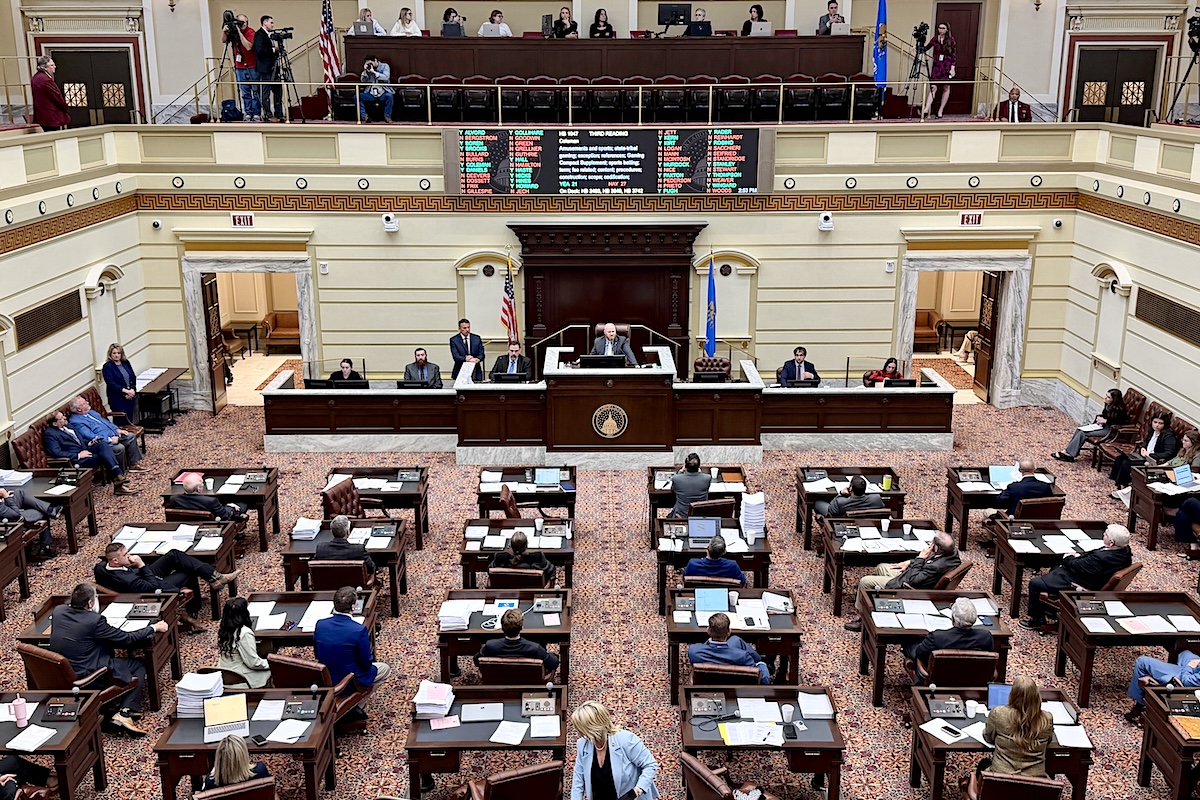

After facing criticism from senators expressing ethical concerns about the darker side of how gambling affects communities, a bill to legalize sports betting failed in the Oklahoma Legislature’s upper chamber today.
While a new version of HB 1047 was revealed Tuesday, concerns from the Cherokee Nation about boundary restrictions and a late announcement of opposition from the Souther Baptist Association combined to spell the bill’s defeat 21-27. If passed — and upheld over a likely gubernatorial veto — the bill would have legalized sports betting through modification of the state’s Model Tribal Compact to authorize both in-person and mobile wagering.
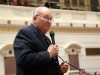
Several senators whom proponents had hoped would vote in favor of the bill ended up opposing it. Sen. Bill Coleman (R-Ponca City), who carried the legislation in his chamber after negotiating details for the past two years, formally captured the vote after it failed, leaving the possibility of a reconsideration. However, speaking about half an hour after the vote, he sounded resigned that swaying four senators — and then seven others for a veto override — felt unlikely.
“If we could pick up four votes, great, but I don’t know that we can. (We’ll) try again next year,” Coleman said, hinting at Gov. Kevin Stitt’s impending exit from office. “Tribal relations might be better next year.”
The bill was expected to be less controversial in the House, where HB 1047 author Rep. Ken Luttrell also seemed slightly deflated after Wednesday’s Senate vote.
“I don’t know if Coleman is going to be able to sway any votes over there or not,” said Luttrell (R-Ponca City). “He’s going to try to get the pulse.”
Sen. Regina Goodwin (D-Tulsa) asked critical questions about the bill’s prescription of tribal boundaries for mobile bets, and seven of the Senate’s 11 Tulsa County-based members voted against the bill, perhaps influenced by the Cherokee Nation’s opposition. Other senators representing northeast Oklahoma also opposed HB 1047 on Wednesday.
The entirety of floor debate, however, was focused on the moral ramifications of the law’s passage, not on potential tribal jurisdiction issues. Senators discussed the prevalence of gambling addiction and its disproportionate effects on young men and economically disadvantaged people.
For the majority of the chamber, those factors were worth more than what Coleman estimated would be $15 million to $18 million of annual revenue the state would likely receive from a proposed 8 percent exclusivity fee.
RELATED
Despite tribal boundary disagreement, lawmakers try to tee up a sports betting deal by Tres Savage

“When it comes to sports gaming in Oklahoma, I’ve always had an issue determining whether or not the positives outweigh the negatives,” said Sen. Darcy Jech (R-Kingfisher). “My concern with what we’re doing and with expanding gambling in Oklahoma are those intangible costs or those negative consequences.”
Jech said that, in the 38 states that have approved sports gambling since a 2018 Supreme Court decision led to a betting boom, studies have shown worsened economic outcomes among households participating in betting.
“The data is very compelling, and it’s not good. Those states have seen a rise in financial and family problems, and it’s been disproportionate among the most economically precarious households,” Jech said. “Gambling has proven to foster addictive behaviors, a rise in credit card defaults, mortgage delinquencies. Another study showed that households save less when people are gambling. One study showed that for every dollar spent on betting, households put $2 less into investment accounts. More families are having overdraft issues in their accounts or hitting their limit on credit cards.”
Sen. Dusty Deevers argued there is a “fundamental ethical problem” with the state profiting directly off Oklahomans’ losses.
“The role of the government, as we’ve said in our constitution — and that we say in our both the federal and our state constitution — is to protect life, liberty and property, not to normalize addiction and to prey on weaknesses and build revenue streams off of citizens’ losses,” said Deevers (R-Elgin). “Essentially, what’s happening is it turns what should be disciplined stewardship into speculation and loss. And when the state sanctions that, it’s no longer neutral. The state becomes a participant in a moral hazard.”
The bill would have provided all state fees from wagers placed on events sanctioned by the National Basketball Association or Women’s National Basketball Association to the Strong Readers Revolving Fund upon enrollment of SB 1778, legislation intended to improve Oklahoma’s early literacy outcomes.
But Sen. David Bullard, who voted against the bill, rejected the argument that Oklahoma children would benefit from the legalization of sports betting.
“I taught 190-plus kids every single year. I never once taught a kid that I had the thought, ‘I wish that kid’s parents would gamble just a little bit more,'” Bullard (R-Durant) said Tuesday. “Because what I witnessed is, they’re gambling away milk money. So expanding isn’t going to help a single kid. It’s going to hurt kids.”
Wager fees from games other than those sanctioned by the NBA or WNBA would be split. Under the bill, 40 percent would have been deposited into the Global Marketing of Oklahoma Tourism through Professional Sports Revolving Fund, a new account created for “grants to a professional sports team that is part of the National Basketball Association and located in a county in this state with a population exceeding 600,000.” The grants would be eligible for several uses, including tourism initiatives, public safety improvements, job trainings and supplemental educational programs.
The remaining 60 percent would be distributed to the athletic departments at the University of Oklahoma and Oklahoma State University. Another $25,000 per month would be dedicated to increased capacity for the state’s problem gambling program. Separately, 3 percent of “adjusted total receipts” from a tribe engaged in sports betting would have been distributed to other tribal nations that did not choose to operate a sportsbook.
Coleman: ‘The problem is, it is here now’

Wednesday’s vote came as a surprise to some who viewed the apparent political dynamics as essentially impossible to overcome this year.
Beyond the 25 votes needed for initial passage in the Senate, Stitt has long proposed a sports betting framework not limited to sovereign tribal nations, and he panned HB 1047’s language in a statement Tuesday.
“The governor is not interested in expanding Democrat Gov. Brad Henry’s bad gaming compact that lacks transparency and fair market rates,” said Tevis Hillis, a spokesperson for Stitt.
Overriding a veto in the Senate would have taken 32 votes — seven more than initial passage.
With the 2026 election of a new governor likely to change broader state-tribal negotiations on a host of issues, one Capitol insider said on the condition of anonymity that it made little sense for Senate leadership to make their members vote on such a controversial proposal that faced more than one way to die.
“It’s bad policy, bad politics, and I don’t understand why we’re trying to force this round peg into a square hole at the 11th hour,” the person said.
On the other hand, Coleman argued on the Senate floor that the bill would regulate a practice that is already becoming popular in the state through off-shore and illegal betting, or through prediction markets such as Kalshi or Polymarket. Legalizing sports betting, Coleman said, would allow Oklahomans to access legal sportsbooks’ existing resources for those with gambling addictions.
“Let me give you a history on where I was with sports betting four years ago. The last thing I wanted was to have somebody with a cell phone in their hand and have a gambling attention. The thought of that sent shivers up my spine. I was dead set against it — dead set against it,” he said. “Then I talked to the FanDuel, the Draft Kings of the world, and they told me that, through artificial intelligence, they track problem gamblers. They send problem gamblers emails: ‘Hey, would you like a pause?’ And they cut them off if their problem continues.”
Alex Pitocchelli, senior director of communications at FanDuel, echoed some of Coleman’s points in a statement before Wednesday’s vote.
“Oklahomans are already engaging in sports betting on unregulated offshore platforms — legalization would bring this activity into a safe, regulated market. This effort could generate $75-100 million in revenue for the state over five years that does not exist today, helping to fund various priorities across Oklahoma communities,” he said. “FanDuel welcomes the opportunity to partner with tribal nations to build a responsible framework and encourages lawmakers to move this effort forward.”
During debate, Coleman became animated as he talked about the less scrupulous alternatives Oklahomans have to sports betting, pumping his fist for emphasis.
“Folks, we’ve talked about starting sports betting in Oklahoma today, and how that could lead to problems. Well, the problem is, it is here now and it’s legal. The predictions market is sports betting. You can legally make that bet right here in Oklahoma right now, on this floor, and we don’t get a dime out of it, and they’ve got no laws,” Coleman said, his voice raising. “This is not increasing gambling alternatives in Oklahoma. It is providing a regulated industry to operate sports betting with our tribes versus the predictions market and the black market.”
According to Luttrell, all members of the Oklahoma Indian Gaming Association besides the Cherokee Nation were in favor of the bill. OIGA Chairman Matthew Morgan offered a statement on the bill’s failure Wednesday afternoon.