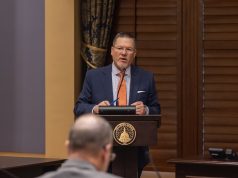

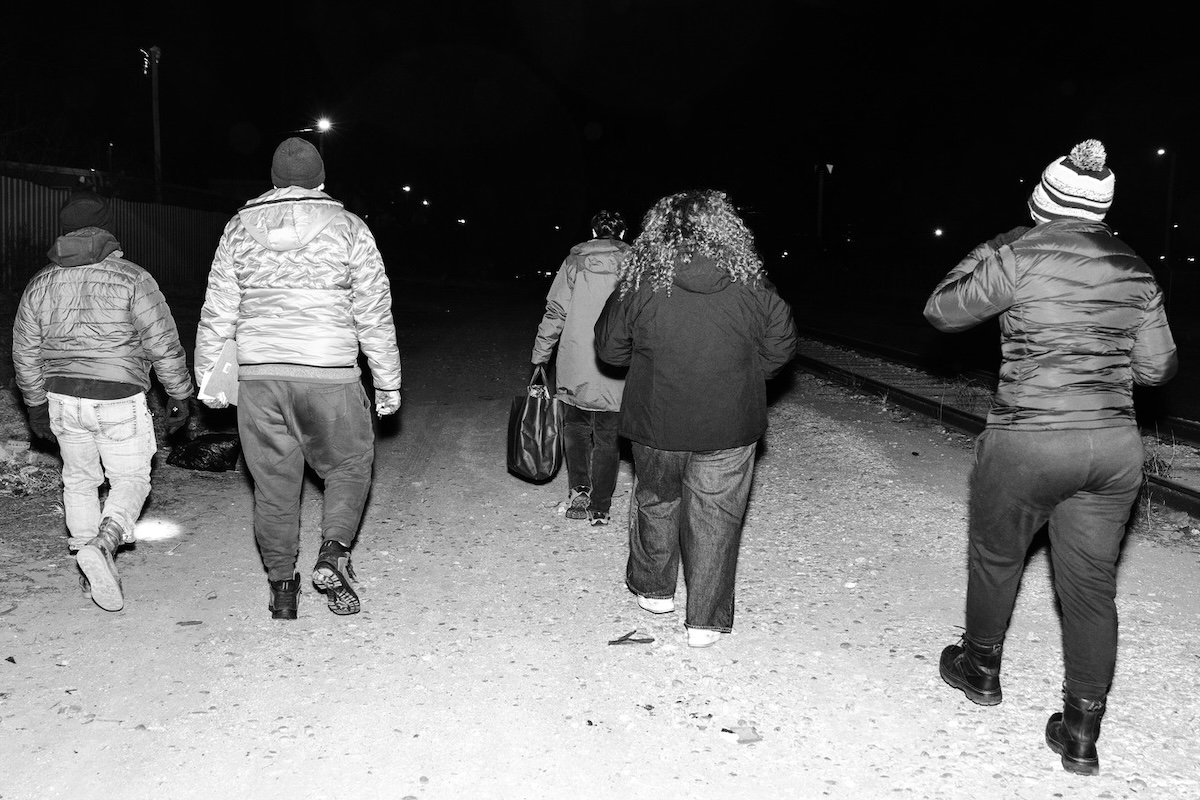

Oklahoma City’s 2026 point-in-time count found homelessness declined by 1 percent in the city after several consecutive years of growth, leaders said Thursday during the State of Homelessness Address at the Yale Theater.
This year’s count found 1,867 people experiencing homelessness when the annual project was undertaken on a bitterly cold day in January. The year before, 1,882 unhoused people had been identified.
While the drop is modest, those on the front lines of one of the city’s most pressing issues count it as a win after a 28 percent surge in the city’s homeless population between 2023 and 2024, and a 2 percent bump in 2025.
The percentage of homeless people living on the streets completely unsheltered fell from a high of 35 percent four years ago to 22 percent in 2026.
“The 2026 point-in-time count is yet another data point telling us that not only are we on the right track, but we are actually beginning to turn the tide,” OKC Mayor David Holt said Thursday.
Three years ago, the city launched its Key to Home program, which has worked to house more than 500 people who had been living on the streets. That program came out of Holt’s task force to address homelessness announced and initiated in 2019. The program has also cleared more than 30 homeless sites throughout the city while attempting to get those living there sheltered.
But homelessness is a long-term issue the city will continue to address in the coming decades. While OKC’s rate of homelessness is below peer cities like Tulsa, Nashville and Kansas City, Missouri, Holt said that with continued growth come added complexities.
“We have moved from the 37th largest city in the United States when I was born to the 20th largest city today,” Holt said. “That obviously just puts a lot more people into our city who could potentially become people experiencing homelessness. But it also obviously puts a lot of pressure on our housing stock and housing prices, which is obviously the key contributor. We know that by nearly every measure — from population, jobs, economic development and national recognition — our city is growing in stature. It’s on the rise, but with that growth comes a lot of complexity. More people means more demand on the systems that were not always built to scale with that growth in homelessness. It’s one of the challenges that generally grows with the city.”
While characterizing zero growth or a modest decline in the city’s homeless population as a victory, OKC Homeless Strategy Implementation Manager Jamie Caves also highlighted several concerning trends the city and its partner agencies will focus on both in the coming months and long-term. Also found in this year’s point-in-time count: an increase in the number of families experiencing homelessness together and a bump in youth homelessness.
This year, there were 120 families identified during the count, which Caves said was a 71 percent increase from the same time in 2022. Additionally, the city’s population of its most chronically unhoused population jumped slightly by 2 percent. Unaccompanied youth homelessness was up 11 percent over 2025, with 181 individuals identified.
On a more positive note, the rate of veteran homelessness dropped 16 percent since last year.
“In 2026, 108 veterans were counted experiencing homelessness in the city,” Caves said. “This is the lowest number in our count history, and it’s a 21 percent reduction since 2022. In the last year alone, veteran homelessness fell 16 percent, the sharpest single-year decline of any subpopulation in this year’s count.”
For Caves and partner agencies like the Homeless Alliance, City Rescue, and Mental Health Association Oklahoma, it means more work is needed.
“I want to be transparent about this one piece of the data that gives us pause,” Caves said. “After reaching a low of 139 people in 2025, the chronic, unsheltered count rose this year to 167. We aren’t glossing over that. Progress in this space is hard won, and it’s not always linear. This increase tells us that we can’t afford to take our foot off the gas. It tells us that while encampment rehousing has demonstrated what is possible, it’s imperative that we sustain and build on that infrastructure. We must continue the efforts that have proven successful, and expand our focus to reach more chronically homeless people in our system. Our trend line tells us that this is solvable.”
Oklahoma House rejects eviction bill
This week, the Oklahoma House twice rejected a bill that would have extended the state’s eviction timeline by excluding Sundays and federal holidays from calculations.
SB 1209 by Senate Minority Leader Julia Kirt (D-OKC) and Rep. Daniel Pae (R-Lawton) failed Wednesday by a 35-53 vote. Pae called the measure back up for reconsideration Thursday, only to see it fail again 40-51.
House Minority Leader Cyndi Munson called the outcome “unfortunate and very frustrating.”
“We talk so much about housing affordability and homelessness issues that we are facing all across our state, and then a solution comes before us, and for some reason, [it fails],” Munson (D-OKC) said. “If you just wait a few more days before those eviction processes begin, people will get their next paycheck, or they’ll find a way to get money so they can pay their rent and not have to go through that whole eviction process.”
Munson, who is not returning to the Legislature owing to her run for governor, said she hopes Kirt and Pae will continue working on the concept next session.
“If housing is going to be something that we continue to talk about, let’s work on those solutions,” Munson said. “What better way than two members of opposing parties finding a way to solve the problem? I don’t know why we can’t get there, but I’m hopeful they will figure it out.”
OKC Housing Authority releases impact report

The Oklahoma City Housing Authority supported the needs of 12,945 people and paid out $35 million in housing assistance to landlords throughout the city last year, according to the agency’s 2025 impact report released last month.
The report found that the city currently owns 3,667 housing units and serves more than 6,000 households. Workers also completed more than 28,000 maintenance orders that helped to address a long-term backlog with city-owned units.
The report also found the city faces a shortage of about 45,000 affordable housing units. A fraction of that shortage was relieved with the opening of Dorset Place in northwest OKC earlier this year, housing about 40 veterans.
Additionally, the OKC Housing Authority is working to develop its Will Rogers Court project, which if completed, would house more than 300 people. That project is subject to grant approval from the federal government currently under review by the Department of Housing and Urban Development.