

WASHINGTON — Oklahoma farmers are speaking up about the slow progress of the 2026 Farm Bill and what it means for their farms.
The initial Agricultural Improvement Act of 2018, known as the Farm Bill, expired in 2023, and after three years of committee meetings aimed at extending it, the Senate Agriculture Committee advanced its draft in late June.
The House version, which advanced in April, states it would provide safety net programs that will stabilize farm revenues through unexpected disasters.
“The base of what you want out of a farm bill is to make sure that when we have disasters in the country, such as drought and floods, that some sort of insurance picks up and helps take care of those farmers and ranchers out there,” said Oklahoma Farm Bureau President Stacy Simunek, who farms near Ponca City.
This story was reported by Gaylord News, a Washington reporting project of the Gaylord College of Journalism and Mass Communication at the University of Oklahoma.

Simunek was in Washington, D.C., the week of July 6 to be part of several meetings discussing the farm bill’s progress, saying changes to the Senate’s version are happening constantly.
“The United States’ people are hurting at this point economically, and trying to keep cheap and safe food for the United States,” Simunek said. “This bill is a must to pass.”
In 2025, family farm bankruptcies increased by 46 percent nationwide. Southwestern states like Oklahoma, Texas, New Mexico, Arizona, Colorado and Utah have seen a 75 percent increase in farm bankruptcies, the highest across the nation.
“A lot of your ranchers, you’ve got to realize, are farmers as well. They’ve set their company up to need both incomes,” Simunek said. “We were supposed to have a baseline on our commodities and our row crops to keep it from going below a potential of bankrupting our producers.”
Simunek now says if nothing comes from the negotiations this year, there will be more bankruptcies at a faster rate.
“When you lose your family farm of three, four, five generations, it’s emotional, it’s stressful, and it definitely takes a toll on some people’s emotions,” Simunek said. “That’s hundreds of years of knowledge that is being lost that you just don’t replace overnight.”
‘The security of this nation relies on having safe food’

For the past three years, Congress has used temporary disaster programs to help offset the wait for a new farm bill.
If the Senate does not pass its version of the farm bill, farmers will be left uncertain if their operations will have the stability to continue, according to Scott Blubaugh, president of the American Farmers and Ranchers/Oklahoma Farmers Union.
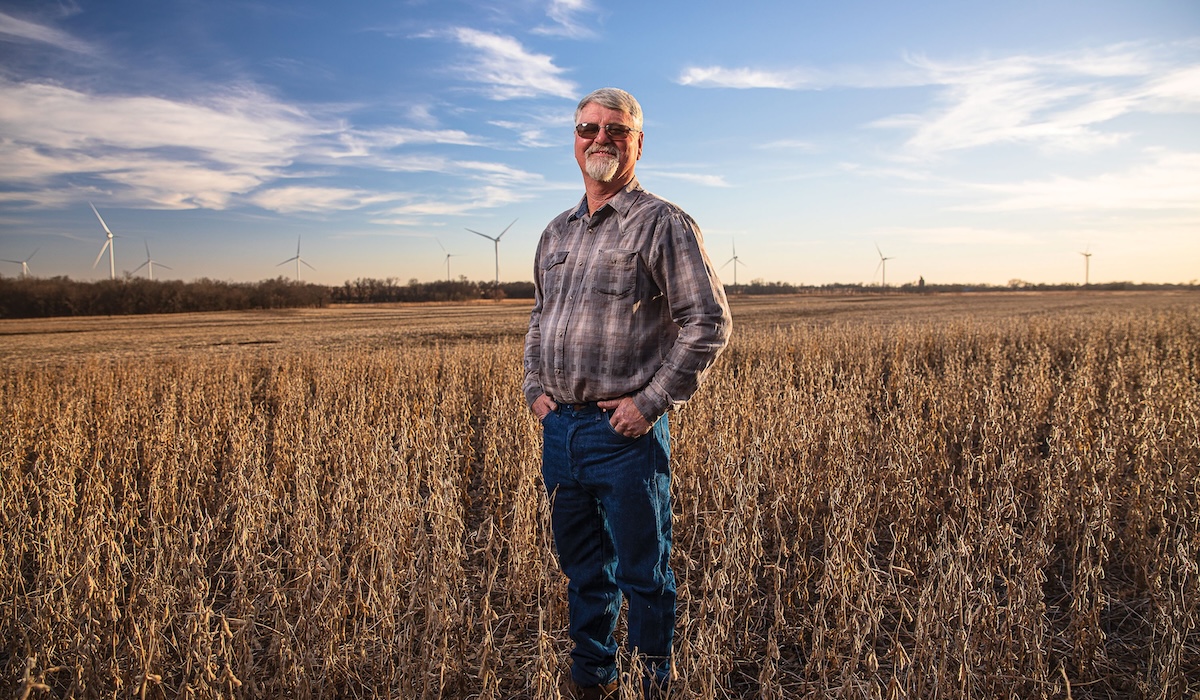
Blubaugh represents the sixth generation of his family in agriculture, a legacy tracing back more than 120 years. His 3,500-acre ranch is located near Tonkawa.
He said he is frustrated with Congress’ process with the bill. Although he said good things have come from the House version, Blubaugh said components about country-of-origin labeling and a repeal of the mandatory electronic identification of animals were left out.
“It’s kind of a Band-Aid on an open wound,” Blubaugh said. “This farm bill doesn’t look much different than the one that’s been in place.”
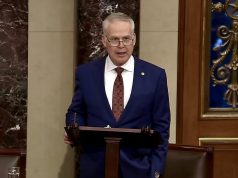
U.S. Senate Agriculture Committee Chairman John Boozman (R-AR) said in a press release that his committee’s “Farm Bill 2.0” will give farms access to expand their resources and markets to strengthen the nation’s food supply.
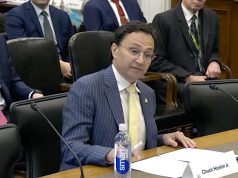
Laura Zaks, associate director of communications and development for The National Sustainable Agriculture Coalition, hopes the Senate will significantly strengthen the bill by restoring and expanding mandatory funding for working lands conservation, local and regional food systems and farmer-driven research and technical assistance.
American Farm Bureau President Zippy Duvall said in a press release that although he appreciated the steps taken to create the Senate’s draft of the bill, “more action is needed from Congress” to ensure farmers can do their work providing food across America.
Simunek farms about 2,300 acres of row crops of soybeans, wheat and triticale, and he raises some cattle on the side. He has been farming for 42 years, building up equity.
“Unfortunately, in the last couple of years. I’m eating into my equity of the next generation to keep the farm alive,” Simunek said.
Blubaugh’s farm is also trying to stay afloat.
“I do have a son that’s come back to the farm after graduating from college,” Blubaugh said. “He wants to be on the farm and wants to carry on our tradition here, but there’s no money in it.”
For Blubaugh, it costs him about $10.50 to raise a bushel of wheat, but the current price of wheat has fluctuated between $6 and $7 a bushel.
Neither Blubaugh nor Simunek is optimistic about the bill passing the Senate since the Supplemental Nutrition Assistance Program might be facing funding cuts.
“The Democrats were in charge three years ago. They couldn’t do it. Republicans have been in charge the last two years. They can’t do it either, and so there have been guesses,” Blubaugh said. “We’re not very optimistic out here in the country as farmers that they will get something passed.”
Simunek said the waiting has taken a toll on him and his farm, noting he will believe there is progress when he sees it.
In preparation for another year passing with no new farm bill, Blubaugh said he has tried to cut costs, but it’s been impossible with the spike in fuel and fertilizer prices.
“We need to get serious about fixing it, and not just tweaking it and making slight adjustments to it. The proposed farm bill, I would call a slight adjustment. It’s not a change,” Blubaugh said.
Simunek has been buying fertilizers earlier and building facilities to hold them in an effort to make sure he has enough for each season.
“The security of this nation relies on having safe food, and this bill is one of the steps to making sure that happens. It is not a ‘maybe’ that we need it. It is a ‘definite’ that we need it,” Simunek said.