

This legal roundup contains updates on several cases and court matters across the state, including a prison operator facing disturbing allegations of systemic abuse, the potential end of 20-year arguments over chicken litter, an upheld conviction for a man who stole Bud Lights from Toby Keith’s farm and a prominent tourist town suing over misallocated tax revenue.
Of course, in an election season where previewing races has taken much of our newsroom’s time, this legal roundup has been delayed longer than a preliminary hearing in a white-collar criminal case.
Read on to learn more about a variety of situations worth noting in Oklahoma.
10th Circuit upholds Oklahoma’s riot statute
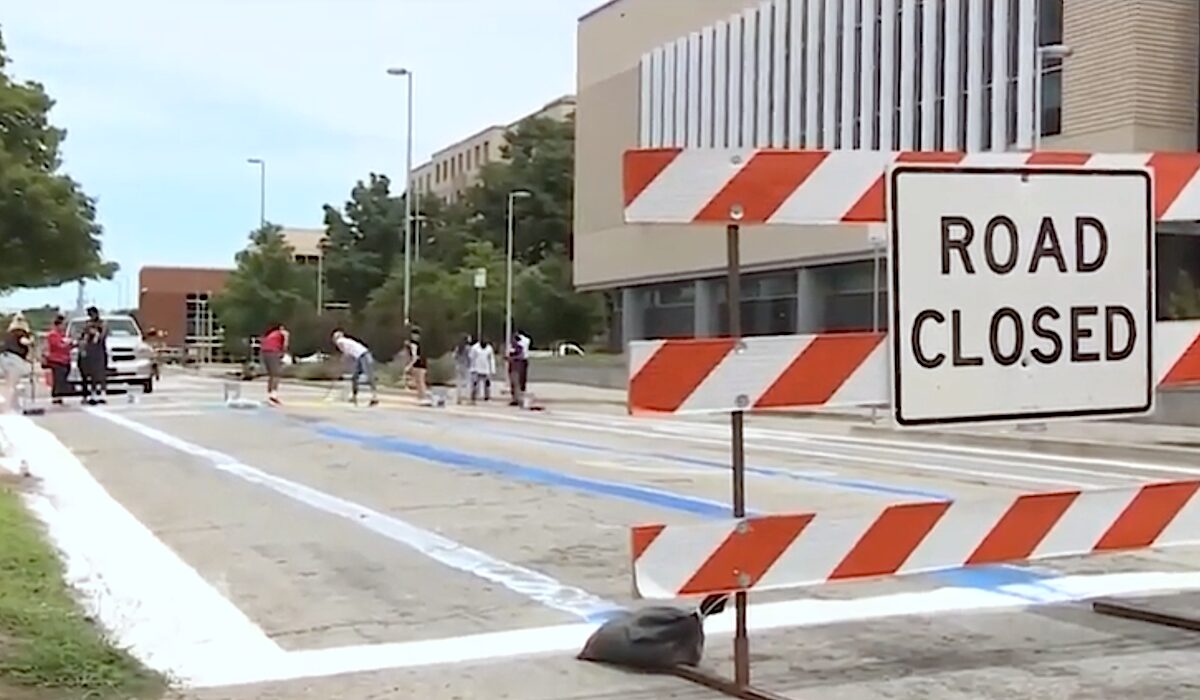
In a case about 2020 protests that ping–ponged between the 10th Circuit U.S. Court of Appeals and the Oklahoma Court of Criminal Appeals, arguments over whether the state’s “riot statute” is unconstitutionally over-broad appear to have reached a final conclusion.
In a unanimous decision, the three-judge federal appellate panel affirmed that Oklahoma’s riot statute is constitutional owing to the state appellate court’s 2026 holding that a threat-based prosecution under the law requires “a purpose or willingness to commit the act or the omission referred to. It does not require any intent to violate law, or to injure another, or to acquire any advantage.”
In rejecting arguments that the state law failed to meet requirements laid out in the 2023 U.S. Supreme Court ruling in Counterman v. Colorado, federal panel determined there was not a realistic danger that the statute would significantly compromise recognized First Amendment protections.
“Before the OCCA answered our certified questions, it was unclear whether the riot statute had any intent requirement,” 10th Circuit Judge Veronica Rossman wrote in the majority opinion. “Now, it is undisputed that, under Oklahoma law, the riot statute requires the state to prove ‘the defendant’s mutual or common intent [of willfulness] with two or more others to use or threaten violence, accompanied by an immediate power to carry the threat into being.'”
Judge denies Oklahoma Funeral Board’s bid to dismiss lawsuit

An Oklahoma County judge has denied the Oklahoma Funeral Board’s request to dismiss a Calvin couple’s lawsuit challenging the state’s restrictions on who may sell caskets to consumers. The decision allows the case to move forward.
Caskets of Honor LLC, along with owners Candice Mentink and Todd Collard, filed the lawsuit in February, arguing Oklahoma statute unconstitutionally prevents them from selling their customized caskets directly to consumers. The couple contends state requirements force them to become licensed funeral directors and operate a licensed funeral establishment simply to sell caskets.
The suit argues the requirements violate protections in the Oklahoma Constitution related to the right to earn a living, due process and free speech. The couple argues their personalized casket business poses no threat to public health or safety and that the laws primarily benefit licensed funeral directors by limiting competition. According to the lawsuit, the Oklahoma Funeral Board fined the business $4,000 after determining it had offered caskets for sale at the Tulsa State Fair without the required licenses.
In March, the funeral board asked the court to dismiss the lawsuit, arguing courts have previously upheld Oklahoma’s Funeral Services Licensing Act and that it serves legitimate state interests, including consumer protection and regulation of the funeral industry. The board also argued the law’s restrictions on advertising by unlicensed sellers did not violate free speech protections.
On July 30, Oklahoma County District Judge Don Andrews denied the board’s request to dismiss the lawsuit.
“This is a massive first step toward protecting the rights of all Oklahomans to earn an honest living free from unreasonable government regulations,” attorney Betsy Sanz in a statement for the plaintiffs. “We now look forward to making the case that these restrictions are unconstitutional on the merits.”
4 beers ago: Conviction upheld in Toby Keith farm burglary
The Ford Truck Man may no longer be with us, but his estate remains in the headlines of this American ride.
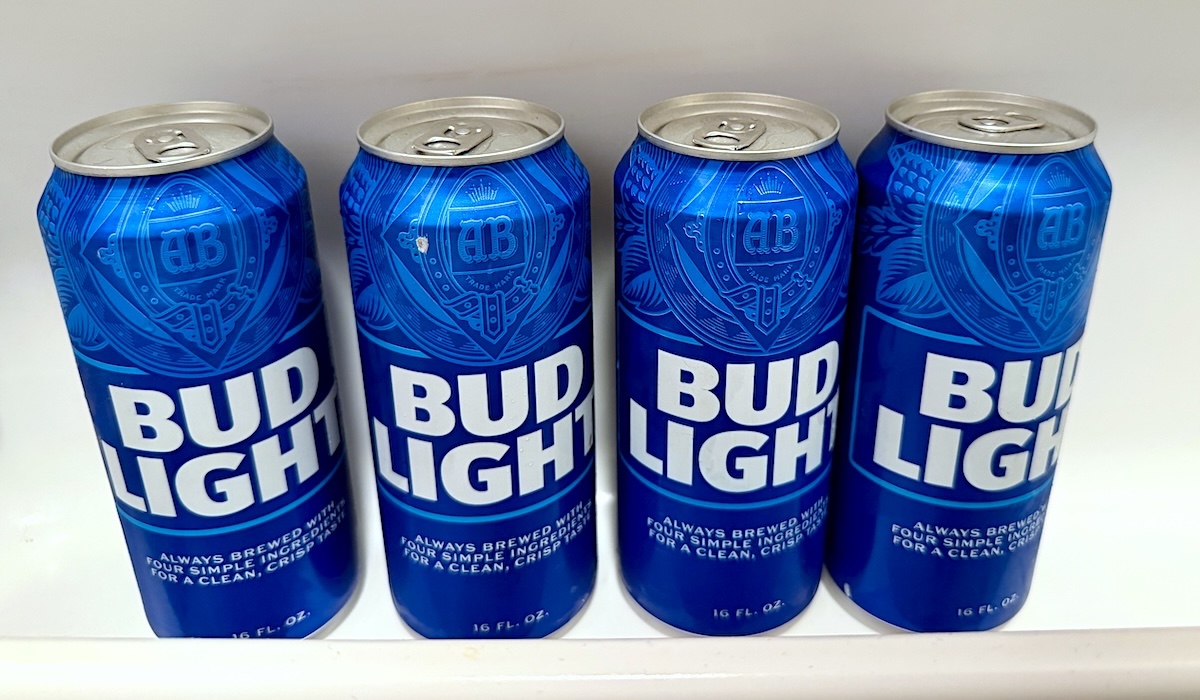
On July 9, the Oklahoma Court of Criminal Appeals upheld the conviction of a transient man charged with stealing four Bud Lights from the late Toby Keith’s Norman farm in June 2024. Borges, however, was discharged from Department of Corrections custody five weeks prior, and his overall record reflects systemic issues at the crossroads of multiple criminal justice systems and mental health issues.
A Cleveland County jury found Anthony Borges guilty of second-degree burglary in April 2025 and recommended a prison sentence of two years. Borges, 35, appealed his conviction, asking the appellate court to reverse or reduce his sentence. Borges argued that prosecutors failed to prove he entered a cabana on the Keith family’s Dream Walkin’ Farms with the intent to steal beer.
In a brief opposing Borges’ appeal, Attorney General Gentner Drummond’s office argued “the defendant entered the cabana with the intent to steal something inside” after being turned away at the door by Keith’s daughter.
“Once he reached the cabana, the defendant approached its sliding glass door. Finding it unlocked, he slid it open and went inside, shutting the door behind him. The defendant proceeded to rummage throughout the unoccupied cabana — opening drawers and cabinets and examining the array of Toby Keith memorabilia strewn about. He eventually came across a mini fridge stocked with various alcoholic beverages, including dozens of cans of Bud Light beer. The defendant grabbed three Bud Light cans and headed back towards the glass door, appearing to be leaving, but then abruptly turned around and grabbed one more. Apparently satisfied with the four Bud Lights, the defendant exited the cabana through the glass door and made his way to the garage.”
Borges then began to drink one of the beers and walk around the family’s vehicles, “looking inside each one as he passed by them.”
Borges’ legal team contended that he “intended to poke around the property for the sake of novelty” owing to Keith’s fame and that his decision to take the beer was “undoubtedly born from the same impulse” after initially going to the house in pursuit of work. When then-Sheriff Chris Amason and deputies arrived on the scene, Borges told one of the deputies that “the lord had told him to come work for Toby Keith.”
According to Oklahoma Department of Corrections records, Borges was released from DOC custody June 1 and was picked up by Chickasaw Nation Lighthorse Police for a warrant on misdemeanor charges of grand larceny, unlawful entry and criminal trespass from 2022. A Choctaw Nation citizen, Borges bonded out on those charges, failed to appear in Chickasaw Nation Court and has not been located, according to DOC records.
In 2021, Borges was convicted of drug trafficking in Oklahoma County and received a 10-year suspended sentence. According to DOC’s case notes, Oklahoma County District Attorney Vicki Behenna’s office was contacted and asked whether prosecutors wanted to file a motion to revoke his suspended sentence, but “the DA office stated they would not at this time.” Borges’ suspended sentence runs through Aug. 18, 2031.
Woman sentenced for stealing $151,200 from Caddo Nation
A former employee of the Caddo Nation Tag Office has been sentenced to six months in federal prison after admitting she diverted more than $151,200 in customer payments into her personal bank accounts.
Larisha Larell Wabaunasee, 39, of Anadarko, was sentenced June 29 by U.S. District Judge Bernard M. Jones II after pleading guilty to embezzlement and theft from an Indian tribal organization.
According to court records, Wabaunasee worked for the Caddo Nation, including at its tag office, where she registered unauthorized point-of-sale accounts as “Cado Nation Tag Offic” and “Caddo Tag Office” using her personal email addresses between October 2023 and November 2024. She used the accounts to redirect customer payments intended for the tribe into her personal bank accounts.
A federal grand jury indicted Wabaunasee on Nov. 4, 2025. She pleaded guilty Feb. 2.
In addition to the six-month prison sentence, Wabaunasee was sentenced to serve three years of supervised release. She was also ordered to pay $151,208.25 in restitution to the Caddo Nation. Wabaunasee self-reported to the Bureau of Prisons on July 29 to begin her prison term.
Follow @NonDocMedia on:
Facebook | X | Text or Email
Oklahomans named in national healthcare fraud enforcement action
Federal prosecutors have charged two Lawton men in an alleged $27 million TRICARE fraud scheme and filed a separate civil lawsuit against an Oklahoma City speech-language pathologist as part of a nationwide healthcare fraud takedown.
U.S. Attorney Robert J. Troester announced the cases filed in the Western District of Oklahoma on June 23 as part of 455 charges nationwide by the Department of Justice.
“Fraud against federal health care programs ultimately harms both taxpayers and the individuals these programs are designed to serve,” Troester said in a press release. “Through this national initiative, the Department of Justice and its partners are committed to holding accountable those who allegedly undermine the integrity of our health care system.”
According to a federal indictment filed June 16, Stewart Johnson, 72, and Stephen Johnson, 47, both of Lawton, were each indicted for conspiracy to commit wire fraud, wire fraud and money laundering.
Stephen Johnson was released on an unsecured appearance bond of $200,000, while Stewart Johnson was released on an unsecured appearance bond of $5,000.
Prosecutors allege the pair operated Combined Home Medical Equipment and fraudulently billed TRICARE for in-person services related to CPAP machines between January 2018 and December 2024. Investigators allege the two men submitted more than 650,000 claims for services they either did not perform or were not qualified to provide, receiving more than $27 million in reimbursements.
In a separate civil complaint filed June 22, the United States and the state of Oklahoma accused Oklahoma City speech-language pathologist Judy Dennis of violating the federal False Claims Act and the Oklahoma Medicaid False Claims Act.
The complaint alleges Dennis submitted more than $2.5 million in false claims to Medicare, Oklahoma Medicaid and TRICARE for speech-language pathology services that were not provided, were not medically necessary or failed to comply with program requirements.
Along with indictments, the nationwide operation also included the suspension of more than 1,000 health care providers from federal programs, more than $182 million in seized assets and coordinated investigations across 56 federal districts, 45 states and territories and multiple international partners.
Lawsuit: Cimarron Correction Facility allows ‘systemic’ sexual assault

(Google Maps)
A lawsuit filed July 8 in the U.S. District Court for the Western District of Oklahoma alleges that three female inmates who were housed at Cushing’s Cimarron Correctional Facility were subject to “a complex scheme” orchestrating repeated sexual assaults and “silence through coercion” while incarcerated.
Four employees of the facility at the time — Trey Dill, Damian Jauregui, William Christian and Reuben Acosta — were named as defendants, alongside CoreCivic, the corporation that operates the Cimarron facility. When KFOR reached out to CoreCivic to clarify where the men now work and whether they remain employed by CoreCivic, the company’s response did not specify their status.
“CoreCivic denies the allegations in this lawsuit and intends to defend against it vigorously. CoreCivic has a zero-tolerance policy for sexual abuse and sexual harassment of any kind. Allegations that fall under the Prison Rape Elimination Act are reported to law enforcement and our government partners as prescribed by standards and regulations,” the response to KFOR’s questions read. “Any individual who makes an allegation is offered medical, mental health and emotional support services. Staff found to have violated our policies face disciplinary action up to termination and, where appropriate, referral for criminal prosecution.”
The lawsuit was filed on behalf of Ashley Schardein, Sydney Sisk and Ashton Mattingly by Ronald Jones II of The Jones Firm.
“Cimarron Correctional Facility created a network of systemic rape, coercion and cover-up,” the complaint states. “Correctional officers, in concert with their supervisors, created a complex scheme to gain access to female inmates and sexually assault them.”
According to the complaint, Cimarron inmates made 11 allegations of sexual assault against facility employees, four of which were substantiated, the second-highest number among CoreCivic facilities. The complaint further alleges the facility operated with “insufficient staff” in 2022, when the earliest of the assaults detailed in the complaint took place.
“As a result of this understaffing, CoreCivic leadership at the Cimarron facility permitted male correctional officers unlimited and unsupervised access to female inmates,” the complaint alleges. “CoreCivic leadership at the Cimarron facility permitted male correctional officers to trade pod assignments to have access to female inmates who they were assaulting.”
The lawsuit seeks a jury trial and claims five counts should be considered, including sex trafficking counts against the individual defendants and CoreCivic, forced labor counts against those parties, and obstruction to prevent enforcement of relevant laws against all defendants. As of Aug. 7, CoreCivic and other defendants do not appear to have filed a response to the complaint.
Poultry companies agree to revised watershed settlement

Months after a federal judge rejected proposed settlements over Illinois River Watershed poultry pollution, Oklahoma Attorney General Gentner Drummond announced a new settlement has been made in a case that has lasted more than 20 years and has featured more than 3,300 court entries.
In an April 8 ruling, U.S. District Court for the Northern District of Oklahoma Judge Gregory Frizzell said the state’s initial settlements with Tyson Foods, Cargill, George’s, Peterson Farms, Cal-Maine and Simmons Foods lacked sufficient funding to provide remediation for phosphorous pollution caused by chicken waste runoff into the watershed. Frizzell also said the proposed settlements did not hold those responsible for phosphorus pollution accountable through civil penalties, nor would the proposed settlements do enough to mitigate ongoing pollution from chicken farming operations.
Drummond said the new July settlement has been strengthened in line with Frizzell’s April 8 ruling.
“When the court asked us to strengthen the agreement, we went back to work and reached a better result,” Drummond said in a press release. “Every company has now made enforceable commitments with clear deadlines, creating a balanced solution that protects our natural resources while supporting one of Oklahoma’s most important industries.”
According to the settlement, the companies will:
- Pay $41,671,000 into an Environmental Relief Fund for watershed stewardship and litigation costs to be transferred to the Oklahoma Conservation Commission;
- Pay a combined $420,000 in penalties to the Oklahoma Department of Environmental Quality Revolving Fund;
- Fund a combined $1.9 million “auditor fund” to pay for an agreed-upon independent compliance monitor;
- Progressively reduce how much poultry litter removed from poultry houses each year is applied to the land within the watershed — from no more than 40 percent in years one and two, to no more than 30 percent in years three and four, down to no more than 20 percent in years five through seven. The amount of litter exported from the watershed to meet those limits many not be land-applied in any other nutrient-sensitive watershed in Oklahoma;
- Fund, or secure funding for, half the cost of installing vegetative buffers on qualifying poultry farms along Lake Tenkiller and the watershed’s scenic rivers, which filter runoff before it reaches the water; and
- Submit to annual compliance certifications and audits with financial penalties for any company that does not meet its litter-reduction commitments.
In his own press release, Gov. Kevin Stitt continued to criticize Drummond for the case, which long predated his time as attorney general.
“It is a shame that state Attorney General Gentner Drummond put our family-owned farmers through years of uncertainty and threats to ultimately reach the agreement I called for him to negotiate long ago,” Stitt said. “His delay tactics and theatrics were clearly unnecessary and harmed real Oklahomans in an attempt to benefit his trial attorney supporters.”
As part of the settlement, Drummond said the state will move aside a December 2025 judgment in the case and close out the lawsuit once the settlement is finalized, a decision that Drummond’s office has asked the 10th Circuit U.S. Court of Appeals to make instead of Frizzell.
David Stanley Dodge loses bid to disqualify opposing counsel

The Oklahoma Court of Civil Appeals affirmed a district court order denying David Stanley Dodge, LLC’s motion to disqualify the attorney representing a Nevada couple who sued the Midwest City dealership over a soured truck deal — the latest in a string of legal battles for the dealership, which was also fighting a revived fraud claim from a different buyer late last year.
Matthew and Genesis Wallace sued David Stanley in August 2023, alleging the dealership advertised a truck with up to $18,000 in “negative equity assistance” but could not locate the truck when the couple arrived from Nevada. The Wallaces agreed to buy a different vehicle under the same terms, but David Stanley later told them their financing had fallen through, even after Arvest Bank said it had approved the loan. The Wallaces’ petition alleged breach of contract, fraud, negligence and violations of the Oklahoma Consumer Protection Act, among other claims.
David Stanley sought to disqualify attorney Rodney Hunsinger and his firm, HB Law Partners, PLLC, arguing Hunsinger’s prior work defending the dealership from 2012 to 2014 — including a settlement with the Oklahoma Motor Vehicle Commission over a similar credit-card payoff advertisement — created a conflict of interest.
Oklahoma County District Judge Natalie Mai denied the motion after a two-day hearing, finding Hunsinger lacked confidential information that would harm the integrity of the proceedings. The dealership appealed.
In a June 16 opinion, Court of Civil Appeals Judge Gregory Blackwell affirmed Mai’s decision, writing that the roughly 10-year gap between the two matters and their distinct factual circumstances meant they weren’t substantially related under Oklahoma’s rules of professional conduct. The decision allows the Wallaces’ case to continue.
Hochatown sues Airbnb, Broken Bow over alleged misallocation of tax revenue

The Town of Hochatown has filed a lawsuit against Airbnb, the City of Broken Bow and the Oklahoma Tax Commission, alleging taxes generated by short-term rental properties within the town were improperly allocated to Broken Bow.
The petition, filed July 15 in McCurtain County District Court, claims Airbnb’s property mapping and tax remittance systems incorrectly assigned numerous Hochatown vacation rentals to Broken Bow, causing tax revenue that should have gone to the town to be distributed elsewhere. While Broken Bow is named as a defendant, the lawsuit states the city is included because it received the disputed funds, not because it intentionally committed wrongdoing.
According to the filing, Airbnb collects municipal taxes from guests booking short-term rentals through its platform before remitting those funds through systems coordinated with the Oklahoma Tax Commission. The suit alleges inaccurate ZIP code data, defective jurisdictional mapping, flawed GIS integration and other administrative errors resulted in properties inside the town’s municipal boundaries being coded as located in Broken Bow.
The lawsuit says Hochatown notified Airbnb of the issue and requested corrective action. Although Airbnb allegedly acknowledged problems involving unmapped addresses, latitude and longitude inputs and mapping limitations, the town contends the company failed to implement adequate systemwide corrections. The town says the amount of improperly distributed tax revenue is unknown but believes it is substantial and cannot be determined without court-ordered discovery.
In a statement posted on the town’s Facebook, Hochatown attorney Liz George said litigation was a necessity to protect the town’s allocated tax dollars.
“The town places no blame with Broken Bow and understands that the actions of Airbnb have put them in a very difficult position as well,” George said. “We are hopeful that we will be able to work together to reach a permanent resolution to this problem in favor of both communities.”
The town is asking the court to order disputed tax revenues into an escrow account while the case proceeds, determine which municipality is legally entitled to the funds, redirect any misallocated tax revenue to Hochatown and award other equitable relief.
Complaint against NSU, NEO Native American scholarships filed by anti-DEI group
Do No Harm, an organization consisting of critics of diversity, equity and inclusion efforts and “gender ideology” in the medical profession, filed a complaint with the U.S. Department of Education’s Office for Civil Rights arguing Native American scholarship programs at Northeastern State University and Northeastern Oklahoma A&M College violate Title VI of the 1964 Civil Rights Act.
Programs tailored to Native Americans are generally understood as applying to Indians as a political classifications based on tribal citizenship and not as a race-based category. However, Do No Harm argued the Northeast Oklahoma Recruitment and Advancement of American Indians into Nursing scholarship funded by Indian Health Services violates Title VI by “unlawfully discriminating against white students and other races they disfavor,” and that the 1974 Morton v. Mancari case — generally understood to clarify “Indian” is a political classification and not a racial one — did not apply in this context.
“Nothing justifies extending Mancari’s ‘limited exception’ for certain federal employment programs to the ‘new and larger dimension’ of race-based scholarships,” Do No Harm’s complaint reads. “For all these reasons, Do No Harm requests that the Office for Civil Rights open an investigation into NSU’s and NEO’s NEORAAIN Scholarship and find that its brazen race discrimination violates Title VI.”
Kurt Miceli, the chief medical officer at Do No Harm, called on both colleges to abandon the scholarship’s Native American criteria.
“NSU and NEO are excluding qualified individuals from rich learning opportunities based solely on race, regardless of their academic ability, skills, experiences, and perspectives and even if they commit to serving in Indian health facilities. Favoring one race over all others is not only unlawful and unjust but also discredits the value of hard work and meritocratic achievement that is critical to our healthcare-education system,” Miceli wrote. “Do No Harm urges both universities to reverse their discriminatory ways and recenter their nursing scholarship program around excellence and academic rigor.”
The NEORAAIN scholarship has received praised from members of the Oklahoma Indigenous Nurses Association and positive coverage in the Cherokee Phoenix.
“American Indian communities face disproportionate health disparities, higher mortality rates from heart disease, diabetes, and unintentional injuries, and a life expectancy 5.5 years shorter than other U.S. populations. These outcomes are tied to historic trauma and limited access to culturally responsive care. Increasing Native nurse representation is a critical step toward health equity for Oklahoma communities,” OINA member Sonya Frazier wrote. ” Through NEORAAIN, students receive academic and financial support, and through OINA, they are connected to professional development and mentorship. These aren’t just services, they are relationships that create space for Native students to be seen, supported, and celebrated.”