

While four statewide Republican primaries and 15 legislative elections are barreling toward the Aug. 25 runoff, other Oklahoma stories that have lingered for months are still unfolding.
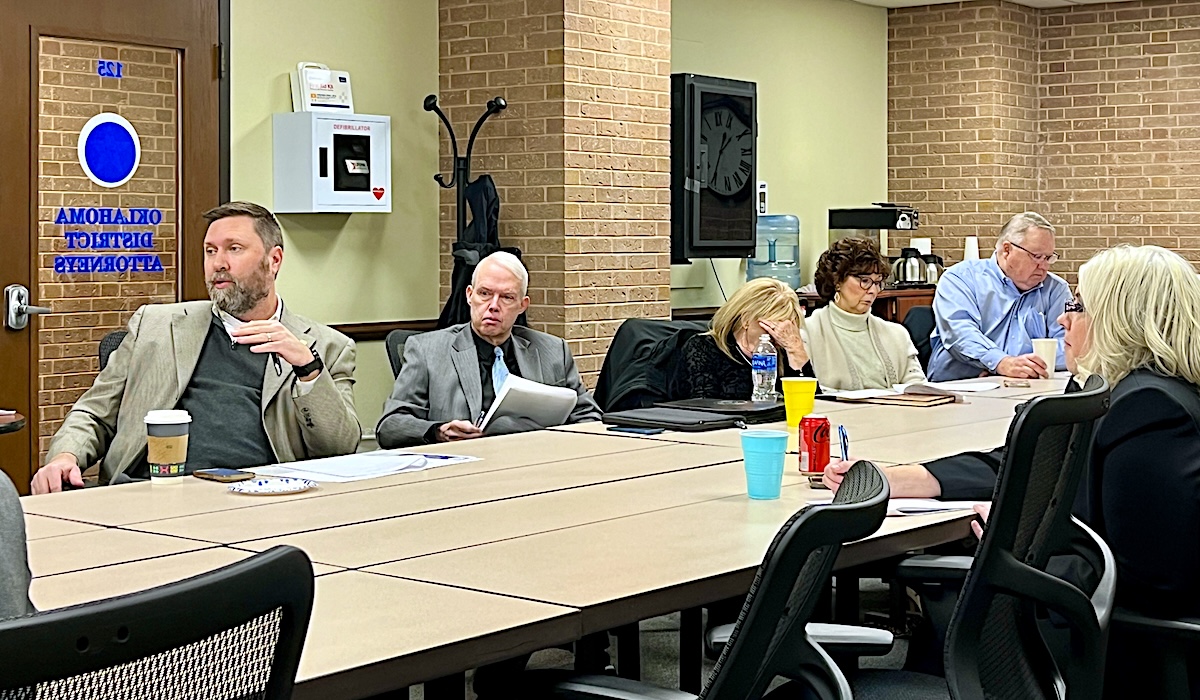
Among those are high-stakes cases about criminal jurisdiction in eastern Oklahoma, which the U.S. Supreme Court functionally affirmed as a series of Indian Country reservations with its 2020 decision in McGirt v. Oklahoma. Three district attorneys in eastern Oklahoma have been sued — two by the federal government, one by the Muscogee Nation — in an effort to stop them from prosecuting Indian defendants, who historically can only be tried for crimes within Indian Country by federal or tribal authorities.
Speaking of eastern Oklahoma, a $2 billion theme park project is not coming to Vinita, but a lawsuit alleging that its financier was defrauded by pastors who pretended God was sending emails to the nonagenarian has seen notable developments.
Meanwhile, the attorney general has sued the governor, six people have been convicted in the death of a woman at the Garvin County Jail, and a multitude of voices will be allowed to intervene in litigation over a proposed Jewish charter school.
If that’s not enough drama to whet your whistle, Aug. 25 will arrive before you know it. In the meantime, make sure you’re caught up on the court cases below.
Ballard, Iski lawsuits stayed pending 10th Circuit’s Kunzweiler decision
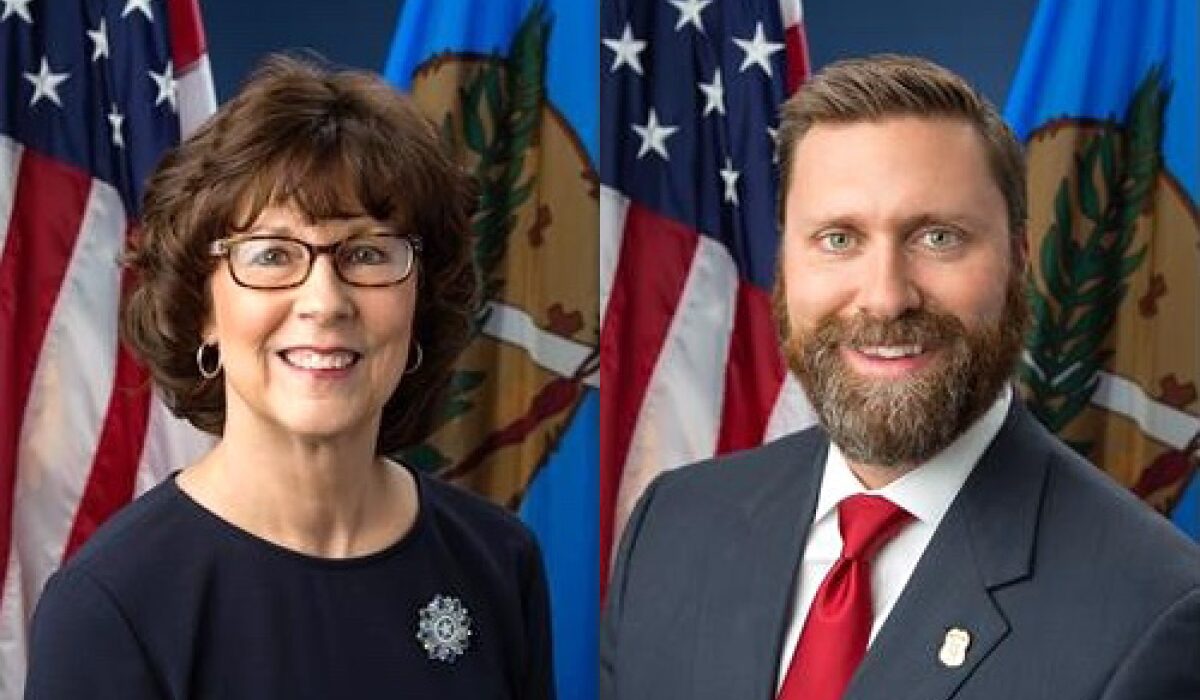
Senior Judge Claire Eagan in the U.S. District Court for the Northern District of Oklahoma issued a pair of orders June 3 granting a motion to stay proceedings in a pair of lawsuits filed against District Attorneys Matt Ballard and Carol Iski by the U.S. Department of Justice until the 10th Circuit Court of Appeals reaches a decision in Muscogee Nation v. Kunzweiler.
Ballard and Iski were sued by the federal government in December 2024 for prosecuting Indian defendants for crimes committed in Indian Country, an alleged violation of federal law. The pair of cases in both the Eastern and Northern Districts of Oklahoma have moved at a glacial pace. A nearly identical case filed by the Muscogee Nation against Tulsa County District Attorney Steve Kunzweiler — filed after the Ballard and Iski suits — has already been decided and is on appeal. Similarly, the Muscogee Nation’s lawsuit against the City of Henryetta has also been adjudicated while the Ballard and Iski cases were pending.
Eagen cited the Muscogee Nation’s appeal in its Kunzweiler case in her orders staying the Ballard and Iski proceedings.
“Courts have come to different conclusions about the state of Oklahoma’s prosecutorial authority in Indian Country, and it would make little sense for this court to rule on the merits of plaintiffs’ claims when the 10th Circuit is considering a case that will dispose of key parts of this case,” Eagen wrote. “Neither plaintiffs nor defendant have shown that they will suffer any substantial injury if the case is stayed, and the relative harms to the parties does not weigh for or against a stay.”
Eagen also warned the Oklahoma district attorneys against charging additional Indian defendants in the meantime.
“Defendant is advised that bringing new prosecutions against Indians in Indian Country could cause the court to reconsider its ruling on defendant’s motion to stay, because this could constitute substantial harm justifying proceeding with the case even if Kunzweiler had not been decided by the 10th Circuit,” she wrote.
Meanwhile, in the 10th Circuit case, the Muscogee Nation submitted its brief April 29, arguing the state of Oklahoma lacks jurisdiction to prosecute Indians for crimes committed within an Indian Country Reservation. Response briefs for Kunzweiler and Tulsa County Sheriff Vic Regalado are due June 29.
Fraud counts continue, but judge kicks RICO claim in American Heartland lawsuit
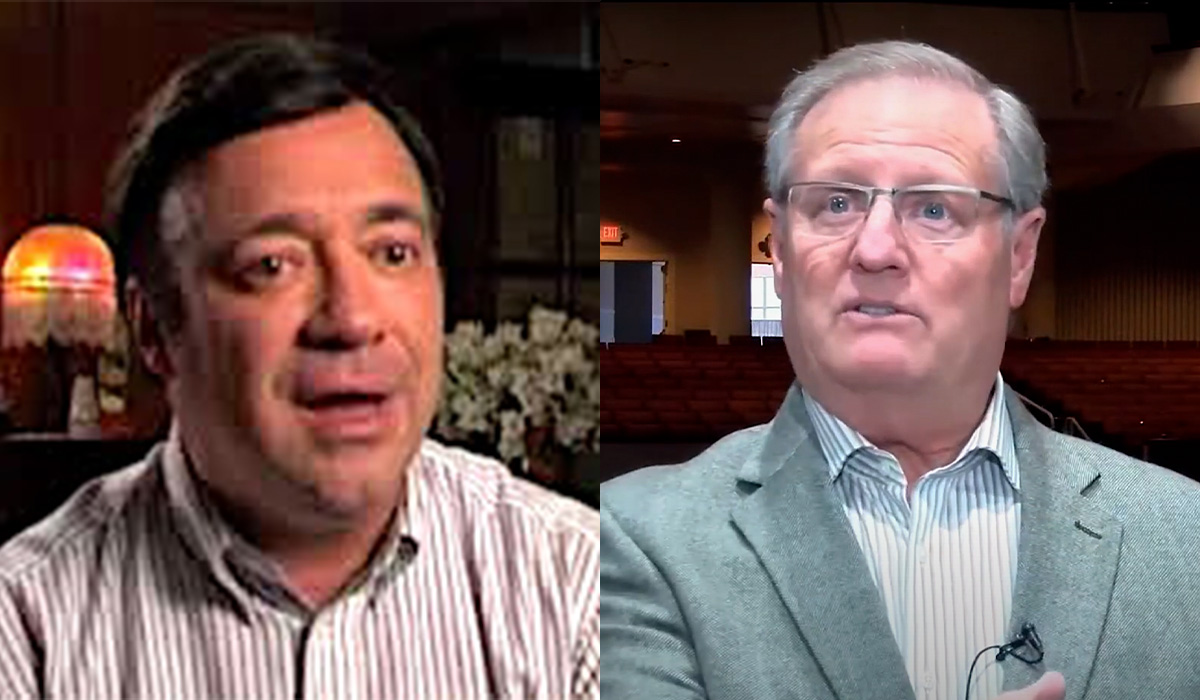
A federal judge has dismissed the RICO claims against Missouri preachers Rick Silanskas and Larry Wilhite, but the fraud claims brought by 93-year-old Gene Bicknell over the unrealized American Heartland Theme Park in Vinita. Project leader Stephen Hedrick is also a defendant in the lawsuit.
Bicknell — a retired Pizza Hut magnate and a former mayor of Pittsburg, Kansas — filed the lawsuit in the U.S. District Court for the Northern District of Oklahoma nearly a year ago. Bicknell alleges his longtime business partner, Wilhite, joined Silanskas in “a pattern of racketeering activity” when they sent fraudulent messages to convince Bicknell they were members of the triune and that “God himself was commanding him” to finance the theme park’s construction. The extent of Hedrick’s alleged knowledge of the scheme is less clear.
In a 35-page order issued May 5, U.S. Magistrate Judge Susan Huntsman granted the defendants’ motion to dismiss the two RICO — Racketeer Influenced and Corrupt Organizations Act — claims, but she denied the motion in regard to the other fraud-related claims.
“Stated at its most basic level, Silanskas and Wilhite’s alleged plan was to convince Bicknell to invest in the American Heartland Project for their own enrichment. The primary way they accomplished this was by convincing Bicknell that it was God’s will, with additional exaggerations/lies regarding Silanskas’s history and connections, as well as regarding the potential for the project’s success,” Huntsman wrote. “The scheme was large in the monetary sense, because Bicknell had a substantial amount of money to siphon, and it involved hundreds of individual “divine” messages. But while that magnitude adds to the complexity to the scheme, overall it was not a complex plan — it involved two or three perpetrators, simple email management, and unsophisticated means.”
With the RICO counts dismissed, Bicknell’s lawsuit remains in its discovery phase regarding the fraud claims. Silanskas, who has represented himself pro se and who has irritated the court by filing pleadings that contain AI-hallucinations, recently filed an update bemoaning “technical issues that delayed access to [a] replacement cellular telephone.”
Ordered by the court to provide a third-party forensic vendor with two-factor authentication for the production of digital data, Silanskas said that on June 12 “the replacement cellular telephone was successfully activated following continued efforts with AT&T” and the vendor has “immediately resumed work to complete the forensic extraction.”
Silanskas violated an order from Huntsman earlier this year by changing the password on an email account cited in discovery. Bicknell has continued to request sanctions against Silanskas, which are pending before Huntsman.
On June 15, the court held a hearing on dueling motions to compel discovery by Bicknell and Wilhite, who is a 1975 graduate of Noble High School. Both parties were ordered to product documents and answers. Meanwhile, Gene McComb, the director of acquisitions for the project and the Mansion Entertainment Group, is poised to be deposed by Bicknell.
Federal judge allows intervenors in Ben Gamla lawsuit
On June 3, a federal judge issued an order allowing two sets of intervenors to join the National Ben Gamla Jewish Charter School Foundation’s lawsuit against the Statewide Charter School Board and Attorney General Gentner Drummond.
The intervenors oppose the school’s argument that the school — and other charter schools in Oklahoma — should be considered private actors. Some intervenors believe the decision would have adverse effects for existing charter schools and students.
One set of intervenors, which includes Rabbi Daniel Kaiman and six other Oklahoma taxpayers, objects to the use of taxpayer funds for the proposed school.
“A ruling in favor of Ben Gamla could divert already-limited public resources away from proposed intervenors’ secular schools and to a religious school that would not be appropriate for or welcoming to them or their children and that would impose religion-based employment requirements that the intervenor-teacher could not meet,” attorney Brent Rowland wrote.
They also note a fear that “a decision in favor of Ben Gamla could take away constitutional rights that all charter-school teachers and students now enjoy.” The declarations by the second set of intervenors, which includes five charter school parents, outline concerns for state funding and the rights that students enjoy.
Larissa Port, a parent of an Epic Charter Schools student, wrote that she hoped to intervene to fight for the protection of federal requirements under Section 504 of the Rehabilitation Act of 1973.
“The public school requirements of Section 504 allow my children to have a disability accommodation plan at Epic Charter Schools,” Port wrote. “I believe that my and my children’s interest in having and maintaining a Section 504 disability plan is threatened by the position being advanced by plaintiffs in this lawsuit because plaintiffs seeks to have charter schools in Oklahoma, like Epic Charter School, classified and treated as private schools.”
Other intervenors in the second set worry about the continuation of state and federal funding if Ben Gamla’s argument is successful. Cricket Debra Ann Moore, an intervenor with a student attending the Tulsa School of Arts and Sciences, wrote that she hoped to intervene to “protect my family’s interest in ensuring that charter schools in Oklahoma remain public schools so that Title I funding and state aid allocation” remain.
On June 9, a federal judge granted Drummond’s motion to be dismissed from the case. In the order, U.S. District Judge David Russell wrote that “plaintiffs have not established that the attorney general has a particular duty to enforce the challenged statute such that he is a proper party under Ex parte Young.”
In a statement, Eric Baxter, a Becket Fund attorney who is representing Ben Gamla, said the recent orders do not change the law.
“The Supreme Court has said repeatedly that government bureaucrats cannot shut people out of public programs just because they are religious. It is high time Attorney General Drummond got the memo,” Baxter said.
Drummond sues Stitt for libel, false light, conspiracy over TV ad
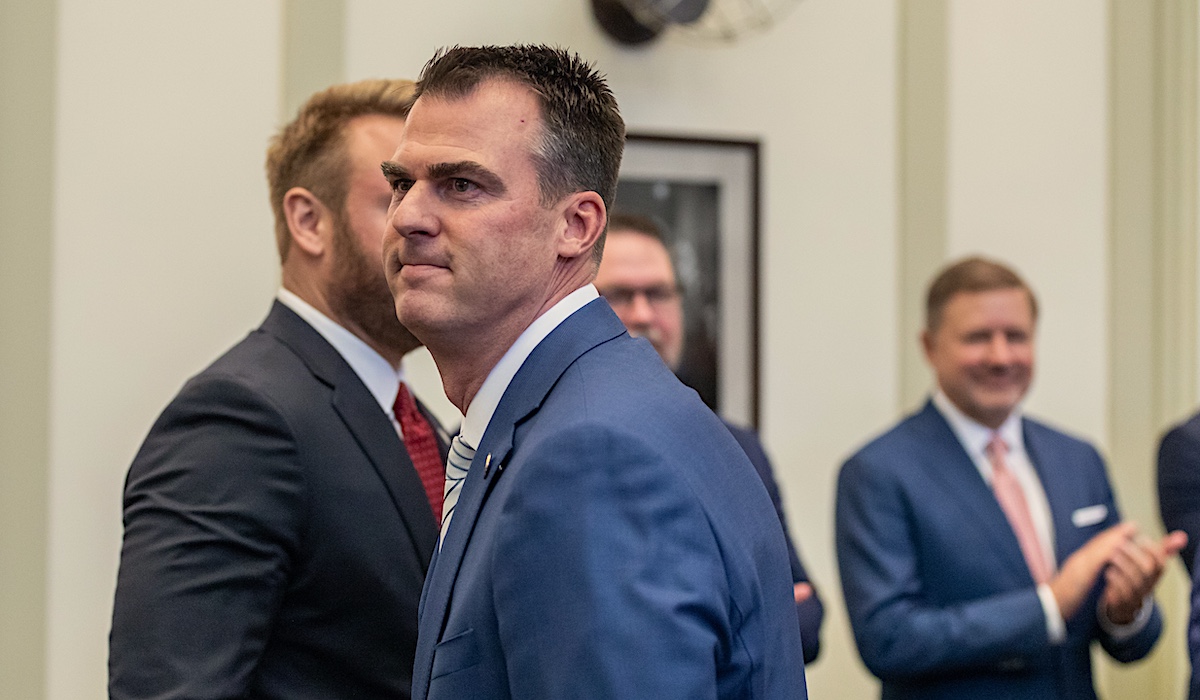
While Drummond is out of — for now — the Ben Gamla litigation, he added more cases to his load when he filed a libel lawsuit May 27 in Osage County against Gov. Kevin Stitt, the School Freedom Fund Oklahoma and parties unknown accusing them of libel and slander, false light and civil conspiracy. The move became the latest escalation of tensions between the governor and attorney general’s offices.
Drummond, who advanced last week to the Aug. 25 Republican runoff for governor, argues in his petition that Stitt hosted a fundraiser for the Club for Growth on May 6 for “mostly out of state donors” for the purpose of opposing Drummond. He alleges the School Freedom Fund Oklahoma obtained funding owing to Stitt’s efforts and that the PAC libeled him and cast him in a false light through campaign advertisements on KOTV Channel 6 out of Tulsa and KWTV Channel 9 in the OKC media market.
“The timing speaks for itself,” Drummond campaign chairman Matthew Parker said. “Gov. Stitt publicly pushed this same false narrative while Stitt-linked dark money groups flooded the airwaves with dishonest attack ads. Oklahoma voters are smart enough to see exactly what’s happening here.”
Specifically, Drummond objected to:
- the claim he is “America’s wokest RINO”;
- the claim he gave “hundreds of thousands of dollars to a group that helps girls transition into boys without parental consent”;
- the claim he “hosted a ‘trans queen story time for Oklahoma kids”;
- the claim he is “outrageous,” “immoral” and “Trump-hating”; and
- the alleged use of artificial intelligence to generate images “to suggest that he is sympathetic of and/or a supporter of transgender issues.”
While claims someone is a RINO, outrageous or immoral fall more in the realm of opinion, neither the claim Drummond is “Trump-hating” nor that he hosted a “trans queen story time” appear to be true. However, such lines are increasingly common in political rhetoric, and a finding of libel in an ongoing political campaign would be rare.
Since Drummond is a public figure, his libel and slander claims will have to prove actual malice on the part of the parties to be successful. His strongest argument appears to be the claim he supported funding gender transitions without parental consent.
According to Drummond, that claim likely refers to a certificate to provide domestic violence and sexual assault services issued to the Diversity Center of Oklahoma in 2021 during the tenure of Attorney General John O’Connor, which Drummond said his office revoked in 2025. (Since the PAC advertisement first aired, the Diversity Center of Oklahoma appears to have shuttered its website, although archived versions describe its services and education programs.)
“These statements are all false and meant to harm Drummond’s reputation with voters,” his attorney’s wrote. “Drummond never directed, authorized, or ‘gave’ any public funds to any organization that facilitates the gender transition of minors, with or without parental consent. The appropriation to which the advertisement apparently alludes was a temporary certification granted to [the Diversity Center of Oklahoma] in 2021 under a prior attorney general, which Attorney General Drummond’s office reviewed and caused to be revoked in 2025.”
False light claims tend to be slightly easier to prove than libel claims, and the possible use of artificial intelligence to generate fake images putting someone in false light during a political campaign may be a question of first impression for Oklahoma courts. Recent polling indicates Oklahomans are not fond of AI content from campaigns.
The civil conspiracy claim argues Stitt, the PAC and parties unknown conspired to commit the torts Drummond alleges in the petition.
Stitt was served with the suit June 2, which would have made his response due today. However, Stitt and the School Freedom Fund have both filed motions to dismiss the case and have requested hearings to that end. Stitt’s attorney, Cheryl Plaxico, called the lawsuit “meritless” and said it should be dismissed under the Oklahoma Citizens Participation Act.
“Drummond’s meritless lawsuit to silence political opponents for publishing truthful statements criticizing him is a Hail Mary attempt to resuscitate his candidacy for governor and punish people who do not support him. The citizens of Oklahoma can identify those who are fit to lead,” Plaxico wrote. “Although Kevin Stitt denies any involvement in the creation of the advertisement, the statements therein only speak truth, which is what Oklahomans deserve to know.”
On June 15, the Oklahoma Supreme Court assigned the lawsuit to be handled by Tulsa County District Court Judge Doug Drummond, who said he is not related to the plaintiff.
Former Garvin County jailer found guilty of violating detainee’s civil rights

A federal jury convicted a former Garvin County Jail detention deputy for violating the civil rights of a pretrial detainee whose untreated medical condition led to her death.
Following a trial in the U.S. District Court for the Western District of Oklahoma, jurors found former detention deputy Paula Kelley guilty of violating a detainee’s constitutional rights June 12 by acting with deliberate indifference to the serious medical needs of Kayla Turley. Federal prosecutors said Kelley’s failure to act resulted in bodily injury and the August 2023 death of Turley, who was already incapacitated when two other detainees slapped, choked and beat her in Cell 8 of the Garvin County Jail.
When 32-year-old Kayla Lee Turley died Aug. 9, 2023, her death capped a tragic spiral that included several arrests for burglary and drug possession, as well as a divorce for which she was supposed to be in court that week. Eight people were charged for their actions and inactions during her final days, which included physical abuse in a crowded Garvin County Jail cell, multiple trips to hospitals, and the slow agony of organ failure.
According to evidence presented at trial, Kelley was on duty at the Garvin County Jail in Pauls Valley when she became aware that Turley required medical attention. Prosecutors argued Kelley — and others also charged — observed Turley’s deteriorating condition but willfully failed to take reasonable steps to obtain medical care.
Kelley was convicted under 18 U.S.C. § 242, a federal civil rights statute that prohibits government officials from depriving individuals of rights protected by the U.S. Constitution. She faces a maximum sentence of life in prison and a fine of up to $250,000.
“This guilty verdict holds this former correctional officer accountable for her shocking failure to protect a vulnerable inmate in her care,” Assistant Attorney General Harmeet Dhillon of the U.S. Department of Justice’s Civil Rights Division said in a statement. “By ignoring the victim’s serious medical needs, the defendant betrayed the most basic duties of her position and violated the victim’s civil rights. The Civil Rights Division has no tolerance for such abuses.”
U.S. Attorney Robert J. Troester said in a statement correctional officers have both “a legal and moral obligation to ensure detainees receive necessary medical care,” adding that the conviction affirms the importance of protecting the constitutional protections afforded to people held in custody.
The verdict marks the sixth conviction stemming from the federal investigation into Turley’s death.
Five other former Garvin County Jail employees have already pleaded guilty to civil rights violations related to the case. Former detention deputies Jennifer Baxter, Vincent Matthews, Alesha Ingram, Melissa Melton and former jail nurse Lynsee Noel admitted to varying roles in failing to obtain medical care for Turley or failing to intervene when other detainees assaulted her after becoming frustrated with her repeated cries for help.
Under their plea agreements, each faces a maximum sentence of 10 years in prison and a fine of up to $250,000.
The Garvin County Jail only holds about 80 people and does not accommodate detainee segregation, instead housing more than a dozen detainees at a time in larger “pods.” In February 2025, Garvin County voters rejected a proposed 1 percent sales tax for the purpose of building a new jail, with 701 ballots (47.9 percent) cast in favor and 762 (52.1 percent) cast against.
(Correction: This article was updated at 9:20 a.m. Monday, June 22, to include comment from District Judge Doug Drummond saying he is not a distant cousin to Attorney General Gentner Drummond. NonDoc regrets the error.)