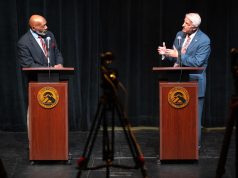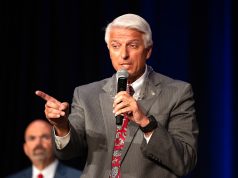

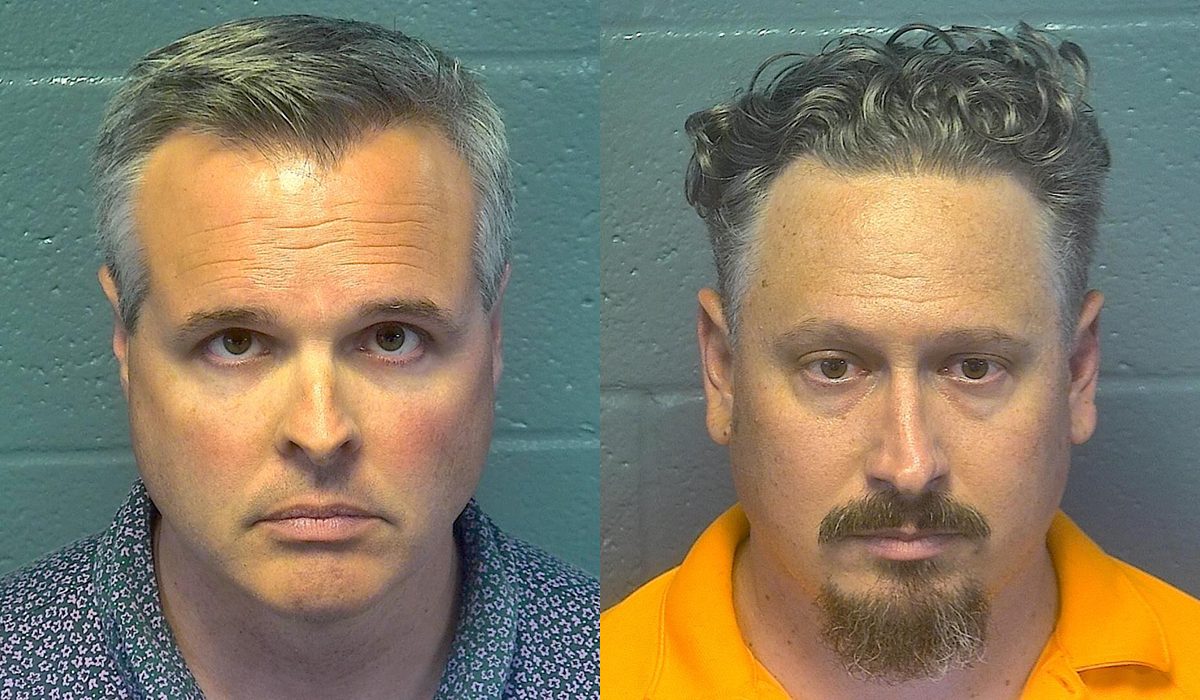

A judge bound Epic Charter Schools co-founder Ben Harris and David Chaney over for trial Thursday, saying prosecutors had established probable cause that the way they steered $22 million of public funding to their private company constituted embezzlement and racketeering.
Concluding the lengthy preliminary hearing that began in 2024, Oklahoma County Special Judge Jason Glidewell dismissed two of the 15 counts against Chaney and one against Harris. Count 11, embezzlement related to a $100,000 transfer to Panola Public Schools, was dismissed against both men. Glidewell referenced co-defendant Josh Brock’s plea-deal testimony about how the transfer was an error and that efforts were made to rectify the mistake.
Glidewell also ruled that the state did not establish enough probable cause to levy count 12, using a computer to execute a scheme to defraud, against Chaney, as his role in the creation of falsified invoices was not clearly established.
But both men — who co-owned Epic Youth Services and contracted with Epic Charter Schools to administer the controversial “learning fund” — still face more than a dozen counts of fraud, money laundering, embezzlement and racketeering. Glidewell’s decision means Harris and Chaney likely face a criminal trial more than four years after they were arrested.
After Thursday’s hearing, Chaney’s defense attorney, Gary Wood, said his client was encouraged by Glidewell’s order to drop two of the charges.
“The state failed with two charges, and they will fail at trial,” Wood said.
Attorney General Gentner Drummond, whose office has been prosecuting the case, released a statement calling Glidewell’s decision “decisive.”
“The defendants should take note: Their attempts to escape accountability have failed,” Drummond said. “We will not be deterred. The facts will come out, and justice will be served.”
Glidewell also ruled on a lingering question raised by defense attorneys during the preliminary hearings and in their subsequent demurrers: whether the funds allegedly embezzled from Epic Charter Schools to Epic Youth Services were public or private. While defense attorneys argued that the funds could not have been embezzled if their “ownership” had become private, Glidwell said Thursday that “the court does not find that persuasive.”
He added that the public school funding, which was appropriated by the Legislature, remained public until it fulfilled its “benevolent purpose.”
Glidewell also rejected an argument that Harris’ attorney, Joe White, made in a demurrer. Prosecutor Jimmy Harmon made a statement Feb. 25 that the defendants are “not charged with embezzling state funds (…) they are just charged with embezzlement,” which White claimed materially changed the charges against his client.
“The state’s changed position as to the charges against Mr. Harris as it relates to the seven counts of embezzlement operates as an admission by the state that it had proffered no evidence by which they could find a crime occurred, much less probable cause that Mr. Harris committed the crime,” White wrote in a count document.
Glidewell disagreed with White.
Speaking to media after Thursday’s hearing, Wood said his client’s defense would not rest on the question of whether state funding had become private money.
“I want to draw attention to an agreed order that was entered back on Feb. 15, 2024, where the state agreed that the defendants owned the assets, investments and/or securities at Bank of Oklahoma,” Wood said. “A big issue has also (been) made at trial that they could not donate something that they own. However, the state has agreed to approve any donations made, which clearly shows that they have full ownership of all funds that were paid to this community strategies, Epic Charter Schools, and cannot embezzle those funds. A jury will agree.”
Harris and Chaney’s arraignments are set for 9 a.m. Wednesday, June 24. However, either White or Wood could file a motion to quash Thursday’s ruling, which would prolong the already drawn-out case’s adjudication. Asked if they plan to do file any motions, Wood did not rule it out.
“That has not been determined,” Wood said.