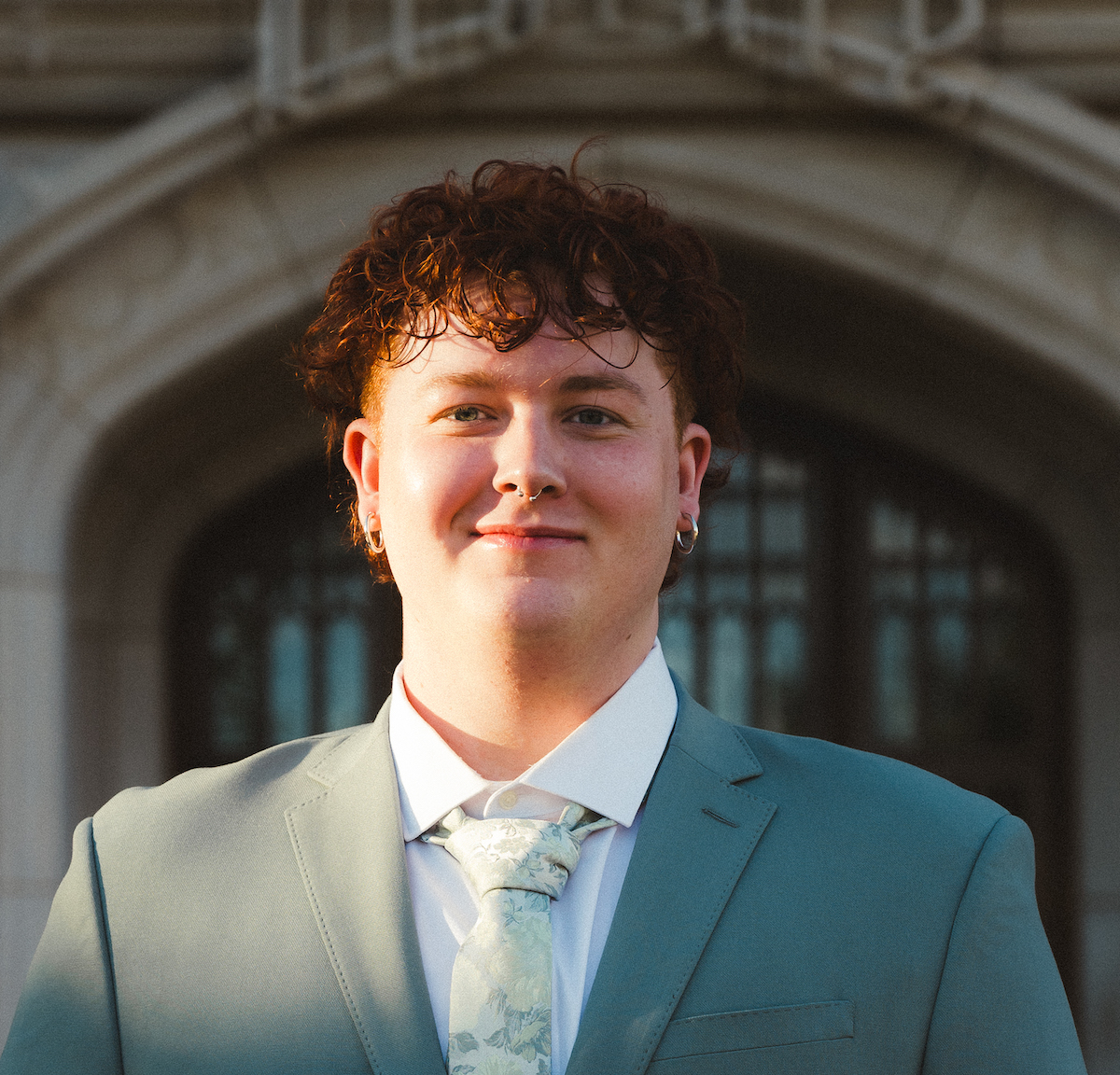


While I had dreamed as a kid of a career in STEM, I learned during COVID-19 that my passion lay elsewhere.
In 2020, I applied to the Oklahoma School of Science and Mathematics, or OSSM. I was accepted in May of that year and began the boarding school completely online in July. Being cornered away in my childhood bedroom in Lindsay for 10 months was not beneficial for my adolescent social development. In January 2021, I moved into the residence hall at OSSM where I would be staying until May, and all of my aspirations began to shift drastically.
Living in one building with 100 teenagers obsessed with becoming doctors or engineers doesn’t really lend itself to storytelling or creativity. I was surrounded by brilliance, but something felt missing. I could solve for variables or grow cultures on a Petri dish, but I couldn’t find my purpose in any of those scenarios. I needed to be true to myself — true to my upbringing as a gay person in rural Oklahoma.
This absence of purpose said something. The more I sat with it, the more I understood what it meant, and a book I was reading — Red, White and Royal Blue — featured a character whose sister was a political journalist. I felt inspired by the prospect of a career writing instead of solving equations.
Growing up, I rarely saw people who lived like me or came from places like mine reflected in the various news media. The coverage that did exist often felt distant from the communities I knew. I began to understand that more diverse media produce more diverse coverage, which in turn increases the value of journalism. It asks more questions, reaches more people and serves democracy more fully. Believe it or not, this realization didn’t feel that far removed from my education at OSSM. It felt like the end goal I’d been pursuing without knowing it.
OSSM taught me how to think rigorously and how to care about precision. The same analytical focus that carried me through chemistry labs and late-night problem sets now shapes the way I approach a story: how I build a line of questioning, how I weigh evidence, how I follow a thread until it leads somewhere newsworthy. I graduated OSSM without a passion for science, but I left with something vital — methodology.
Follow @NonDocMedia on:
Facebook | X | Text or Email
Leaving the laboratory
When I started my first-year journalism courses at the University of Oklahoma, I finally understood what I had been chasing. Journalism has become a public service, and the reporters who do it well are the ones who understand what’s at stake for the people they cover. At its core, journalism involves accountability and access. I will always care about holding the people shaping policy in my home state accountable and making sure that my fellow Oklahomans have the information to do so.
My passion for journalism truly solidified when I traveled to Minneapolis in 2024 as part of the OU Gaylord College of Journalism and Mass Communication’s “Voices of Resilience” reporting project, where I covered the fourth anniversary of George Floyd’s murder. I spent time in George Floyd Square, talking with people in the community who had turned a site of grief and international coverage into a living, purposeful monument.
That experience taught me what no classroom fully could: The most valuable thing a journalist can offer a community is presence. More than just driving through for a headline, journalists must show up and let people tell their own stories in their own words.
This applies most directly to civic and government reporting. The decisions made in legislative chambers and county courthouses affect all Oklahomans, including the ones who don’t often see themselves reflected in the news. I want to close this gap in a way that makes the consequences of bureaucratic processes understandable to the communities most affected.
I’m excited to bring that commitment to my internship at NonDoc this summer. Oklahoma has countless important stories, and NonDoc has built a reputation for telling them with seriousness and contextual depth. I look forward to sharpening my reporting, asking harder questions and finding the stories that deserve more attention than they are getting.
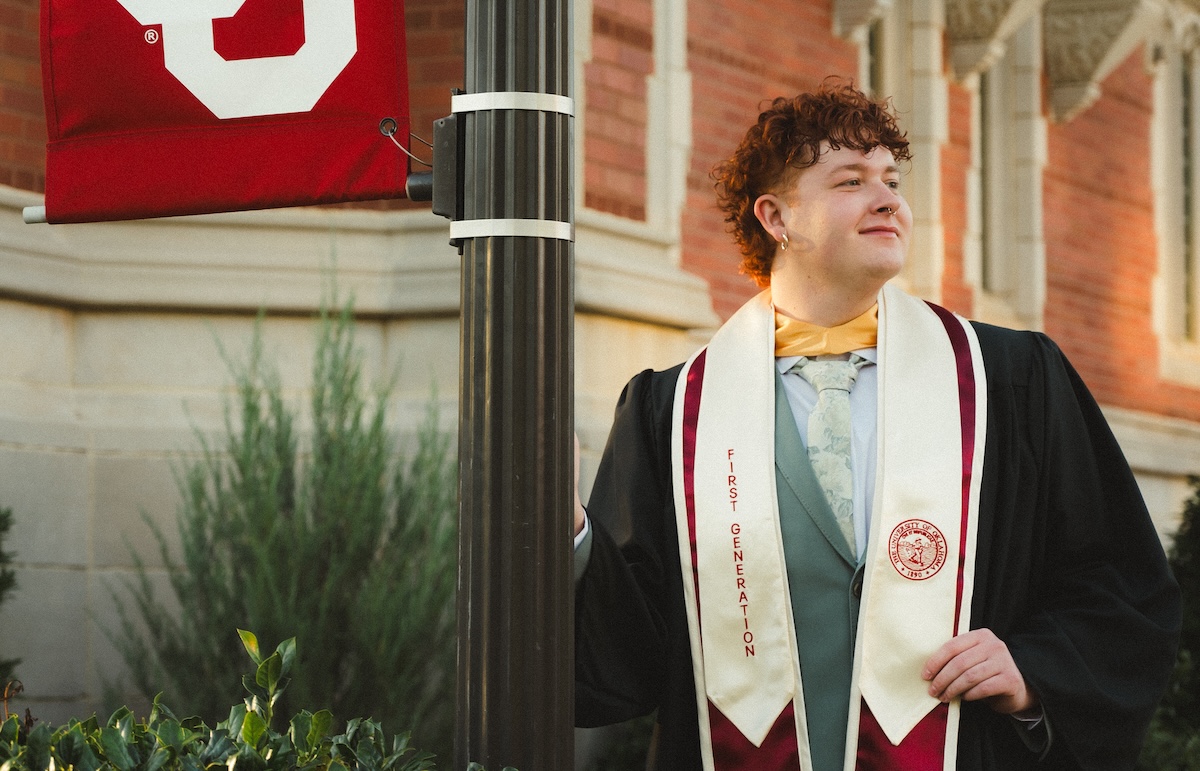
As a first-generation college graduate with a minor in Spanish, I often consider what it would have meant to see myself in the media as a kid in Lindsay. I can’t go back and change that, but I can be part of changing who tells the stories, whose stories get told and why any of it matters.
That’s more than enough to keep going.