

Faced with hard decisions, turn to the data.
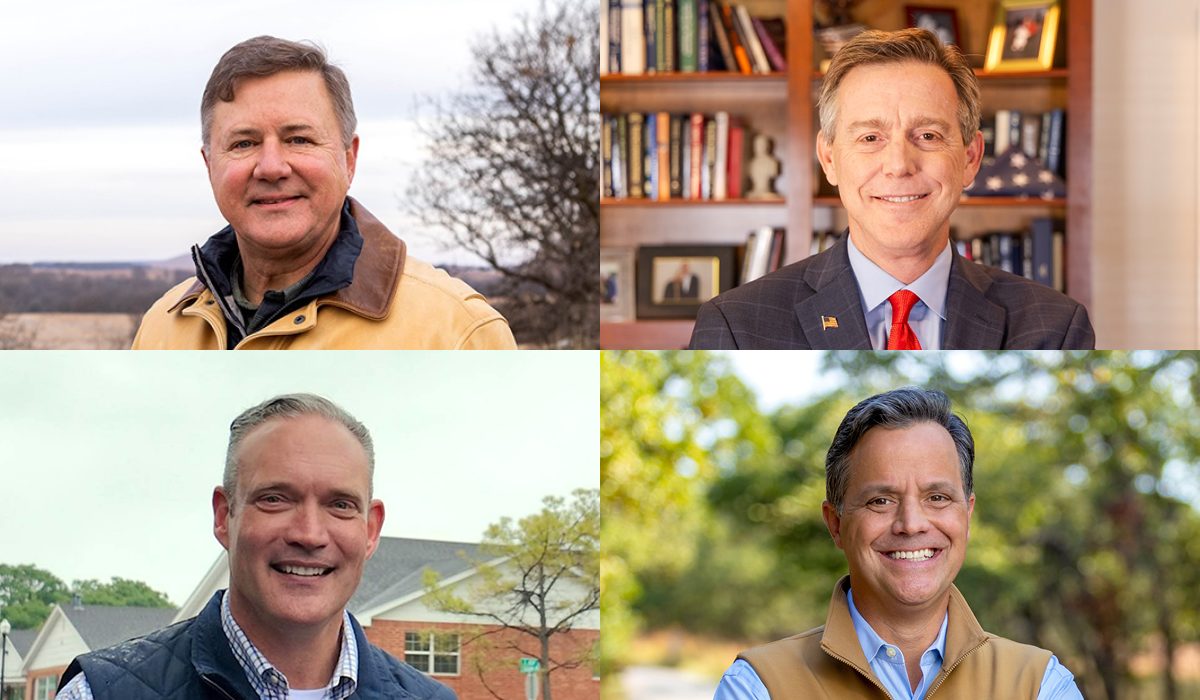
Back in February, when NonDoc announced a May 28 gubernatorial debate ahead of the Republican primary election, we established a 12 percent public polling threshold for participation. A Jan. 28-29 poll from CHS & Associates showed Gentner Drummond, Charles McCall, Mike Mazzei and Chip Keating — the four candidates who are raising and spending millions of dollars on their campaigns — each qualifying above the 12 percent mark.
In the months to follow, we figured, other polling would be released publicly. That data would show whether any of the other candidates — most notably Jake Merrick, who stood at 5 percent in the January poll — had generated momentum and reached the 12 percent qualification mark.
But as March turned to April and became late May, no polling was available publicly.
Anti-AI sentiment
In the poll conducted May 21-25, nearly 90% of respondents expressed support for requiring campaigns to disclose the use of artificial intelligence in materials and ads.
Further, about 75% of respondents expressed support for the Oklahoma Legislature to ban the use of AI in campaign materials and ads.
Sure, numbers exist — somewhere. Campaigns poll their own races, but those results are typically private and/or considered slanted toward the campaign paying for the poll.
Of course, interest groups also poll competitive political races, and sometimes they are willing to release their numbers publicly. This election cycle, however, that has not been the case. While third-party groups have gauged the state of the governor’s race, they have kept their numbers private.
As a result, we faced a conundrum leading up to this week’s GOP gubernatorial debate. With no public gubernatorial polling since January, how would we know whether Merrick, Leisa Mitchell Haynes, Kenneth Sturgell, Jennifer Domenico or Callup Anthony Taylor had closed their gap with the top four candidates? Would those January numbers be the only ones available to judge who qualifies — or even comes close to qualifying — for the debate?
In an effort to give those candidates the benefit of the doubt, NonDoc chose to spend money and place a poll in the field ourselves.
With invaluable help from University of Oklahoma political science professor Allyson Shortle and the platform Centiment, our survey gathered responses from registered Republicans across Oklahoma. We collected demographic information, polled the GOP gubernatorial and state superintendent primaries, asked about the use of artificial intelligence in campaign advertising, and included bot-detection and attention-check questions.
The full results (embedded below) show responses from 457 Republicans in Oklahoma. The survey was designed to mirror Oklahoma voter models in terms of geography, gender and income levels. While the accumulated responses may slightly under-represent rural Oklahoma, they still reflect broad geographic diversity across the state among Republicans ahead of the June 16 primary election.
For the Republican gubernatorial primary, the results showed:
- Mazzei with 22.1 percent support;
- Drummond with 21.7 percent support;
- Keating with 21.4 percent support;
- McCall with 18.4 percent support;
- Merrick with 7.2 percent support;
- Sturgell with 3 percent support;
- Domenico with 2.6 percent support;
- Mitchell Haynes with 2.4 percent support; and
- Taylor with 1.1 percent support.
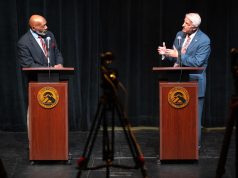
With only the top four candidates reaching the 12 percent support mark, their participation is confirmed for Primary Function, the gubernatorial debate set for 5:45 p.m. Thursday, May 28, at the Cameron University Theatre in Lawton. Seating remains available for the debate, which will be broadcast live on TV by KSWO Channel 7 and C-SPAN, as well as streamed online at KSWO.com, CSPAN.org and NonDoc’s Facebook page.
As promised, the candidates who did not reach the qualification threshold for debate participation will be emailed a series of questions about their campaigns and policy priorities, with the answers published for Oklahoma voters to review.
State superintendent GOP primary numbers

While you digest that information and prepare for Thursday’s event, don’t forget that debates are also scheduled in the Republican and Democratic primaries for state superintendent of public instruction.
Both titled Education Equation, those debates are being held in partnership with Griffin Communications at the Embassy Suites Hotel in Norman. Leading Republican candidates will debate at 5:45 p.m. Tuesday, June 2, and the two Democratic candidates will face off at 5:45 p.m. Wednesday, June 3.
Each debate will be streamed on News9.com, NewsOn6.com and the Facebook pages of both stations and NonDoc. (The Oklahoma Public School Resource Center is the presenting sponsor for these events, and seating is available by RSVP for both the Republican and Democratic debates.)
In our poll, 457 Republican voters were asked which candidate names they recognized and whom they would vote for if the election were held today. The responses indicate a tight race, with half of those served saying they are undecided. Results showed:
- John Cox with 12.3 percent support;
- Adam Pugh with 7.7 percent support;
- Toni Hasenbeck with 6.6 percent support;
- James Taylor with 6.4 percent support;
- Deborah A. Herlihy with 6.1 percent support;
- Robert Franklin with 5.9 percent support; and
- William Crozier with 5.9 percent support.
A whopping 49 percent of respondents said they were undecided on a GOP candidate, a result that largely mirrors a CHS & Associates poll released May 14 that showed six of the seven candidates between 4 percent and 9 percent support. The CHS poll found 61 percent of respondents were undecided.
With the GOP state superintendent race “wide open,” the fourth, fifth and sixth candidates all sat within two percentage points of each other in the CHS poll. As a result, Cox, Pugh, Franklin, Herlihy, Taylor and Hasenbeck have been offered a seat at the June 2 debate.
As a repeat state superintendent candidate who finished fourth in the 2022 GOP primary with only 3.8 percent of the vote despite participating in a NonDoc debate, Crozier will receive the opportunity to answer questions by email that will be published for voters’ consideration.
Far from ideal, a six-candidate state superintendent debate will require shorter answer times and a faster pace to keep the discussion productive. However, the single-subject nature of the position at hand — and the generally undefined nature of the race as a whole — makes a crowded debate stage more manageable for a state superintendent race than a multi-subject gubernatorial contest where four candidates have significant polling and resource advantages over the rest of the field.
In summary, the decisions outlined here — including the expenditure of funds to conduct polling and release it publicly — have been made in an effort to provide Oklahomans with information ahead of the June 16 election.
Will all parties be pleased with the results? Certainly not, but any candidate who did not qualify for the debate stage can voice their displeasure while responding to the questionnaire sent to their campaign.
(Editor’s note: The Frontier is partnering to lead fact checking efforts for the debates discussed above. To read publication’s fact check of the attorney general Republican primary debate held May 18, click here.)
Review the poll conducted May 21-25