

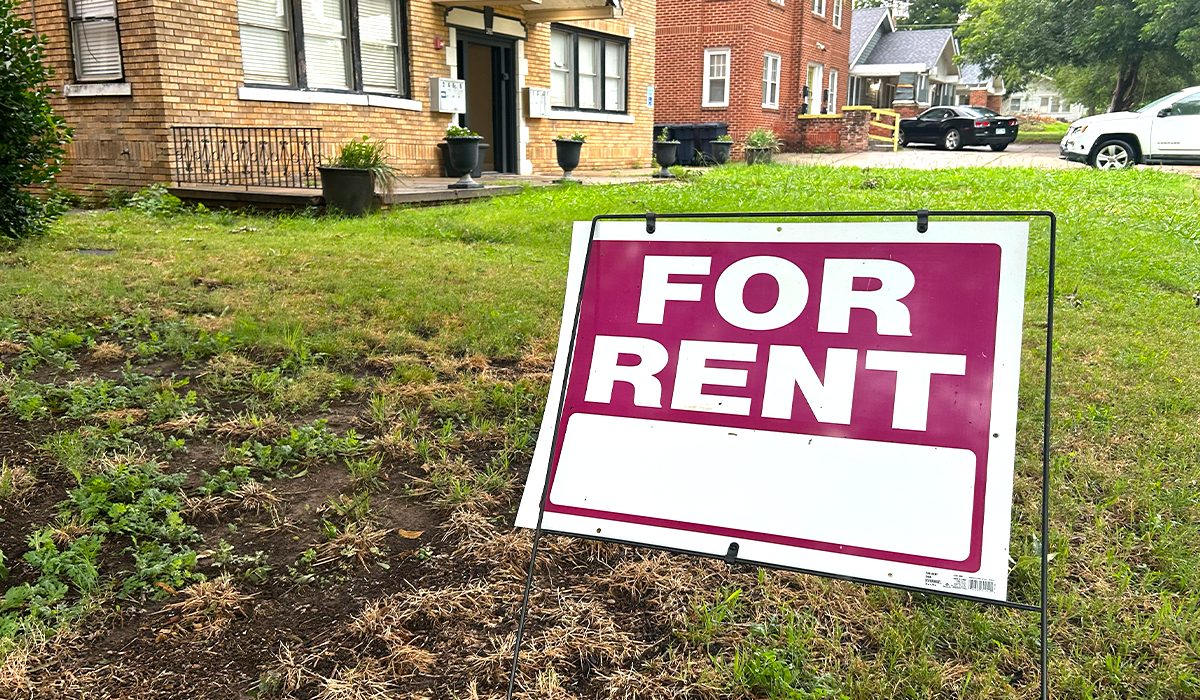

In Oklahoma City, most conversations about housing tend to remain political. There’s talk of zoning, affordable housing programs and development incentives. While these are important issues, they often overlook how housing actually plays out in the day-to-day decisions of small landlords and property managers.
From the outside, housing may appear to be a system, but in practice, it boils down to a series of constant decisions.
Every day, OKC property managers decide whether to adjust rent, how quickly they can respond to maintenance requests, whether to absorb a cost or pass it on to the tenant and how long they can afford to keep a property vacant. These aren’t abstract ideas — they directly impact the tenant experience.
Maintenance is a prime example. A political debate might focus on regulations or enforcement, but in practice, the question is often how quickly a repair can be made. In recent years, labor has become harder to find, and materials have become more expensive. Even simple repairs can take longer and cost more than before. Tenants notice this immediately, though it’s not reflected in policy debates.
Vacancy is another critical issue that receives too little attention. When a unit remains empty, its owner — who often has mortgages or business loans to pay — loses revenue. In OKC, vacancy rates typically hover around 5 to 6.5 percent, meaning even short gaps in occupancy can materially affect smaller operators.
Fees are often part of the public debate, but usually without much context. From an operator’s perspective, fees are often a way to deal with uncertainty. Costs have become less predictable, and smaller landlords don’t always have the capacity to absorb these fluctuations. This doesn’t mean all fees are reasonable, but they are usually tied to real pressures rather than arbitrary decisions.
Influences and outcomes
One of the biggest gaps in the rental affordability debate involves scale. Much of housing policy seems to assume ownership by large institutions. In reality, a significant portion of rental housing in OKC is owned or managed by smaller, local operators. These may be individuals or small teams managing just a few units, or at most, a few dozen.
Such a situation changes how decisions are made.
Smaller operators can act quickly, but they also have less room for error. A major repair, a prolonged vacancy, or a series of late payments can seriously affect their ability to continue operating. These pressures don’t justify bad practices, but they do influence behavior in ways that are easy to overlook from a policy perspective.
None of this is an argument against robust public policy. OKC faces real affordability issues, which must be addressed. However, if the goal is to improve outcomes, it’s helpful to understand how policies interact with the day-to-day realities of housing management.
When new regulations are introduced without this context, the results are not always as expected. Tighter margins can lead to slower maintenance, stricter screening, or reduced housing availability over time. On the other hand, policies that consider the actual operation of the housing market can create greater stability for both tenants and landlords.
More honest dialogue is also needed. Operators are often seen as part of the problem, while policymakers are viewed as the solution. In reality, both groups influence the outcome. Small landlords and property managers make thousands of decisions daily that directly affect housing availability and quality.
Incorporating this perspective into the discussion doesn’t mean lowering standards or ignoring tenants’ needs. It means recognizing that the system only works if it reflects the realities of the housing market.
If Oklahoma City wants better housing outcomes, the discussion must move beyond regulatory frameworks and delve into the nuance of daily operations. That’s where housing decisions are made and where change is most likely to happen.