

Oklahoma’s number of education preparation program completions is still decreasing year-over-year, the number of first-year teachers with traditional certifications remains less than 50 percent and, for the fifth straight year, fewer than 90 percent of teachers statewide hold a traditional certification.
The numbers, presented at the July 23 meeting of the Oklahoma State Board of Education, illustrate an ongoing teacher shortage that has alarmed career educators like Rep. Dick Lowe (R-Amber) and spurred efforts to reverse course.
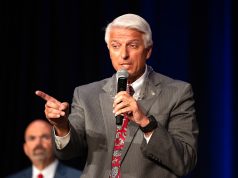
“I am not excited about those numbers. I do not think any of us are,” said Lowe, chairman of the House Common Education Committee. “I think if you look at those numbers, you kind of understand where our test scores are, where they are at and why they have been there. It is just an unfortunate situation we are looking at. I think the light has been shined on the problem.”
Lowe said he does not believe Oklahoma has an overwhelming number of “bad teachers,” but he said more traditionally qualified teachers are needed
“We have really got to get qualified people teaching,” Lowe said. “In any industry, you want qualified people doing the job, and so it is the same thing here. And this is such a critical one with our kids.”
According to state data, less than half of first-year teachers since 2018 were traditionally certified. In 2018 and 2021, approximately a quarter of first-year teachers held emergency certifications, and approximately 30 percent held provisional certifications. Every other year since 2018, that data was essentially flipped, with at least a third of first-year teachers — up to 45.2 percent in 2024 — holding emergency certifications.
Similarly, the number of education preparation program completions has been on a downward trend since at least 2013, according to data presented to the State Board of Education last week. In 2013, 1,708 individuals completed an EPP. In 2024, 1,037 did so. From 2013 to 2024, there was, on average, a 4.41 percent decline in the number of EPP completions.
Beginning in 2018, the percentage of emergency-certified teachers began to balloon as the percentage of traditionally certified teachers constricted. In 2016 and 2017, less than 1.5 percent of teachers were emergency certified. In 2018, the number rose to 2.3 percent, and it peaked in 2024 at 6.4 percent. The number of emergency-certified teachers has begun to decrease, sitting at 4.6 percent as of October 2025.
‘A retention problem’: New initiatives aim to train teachers

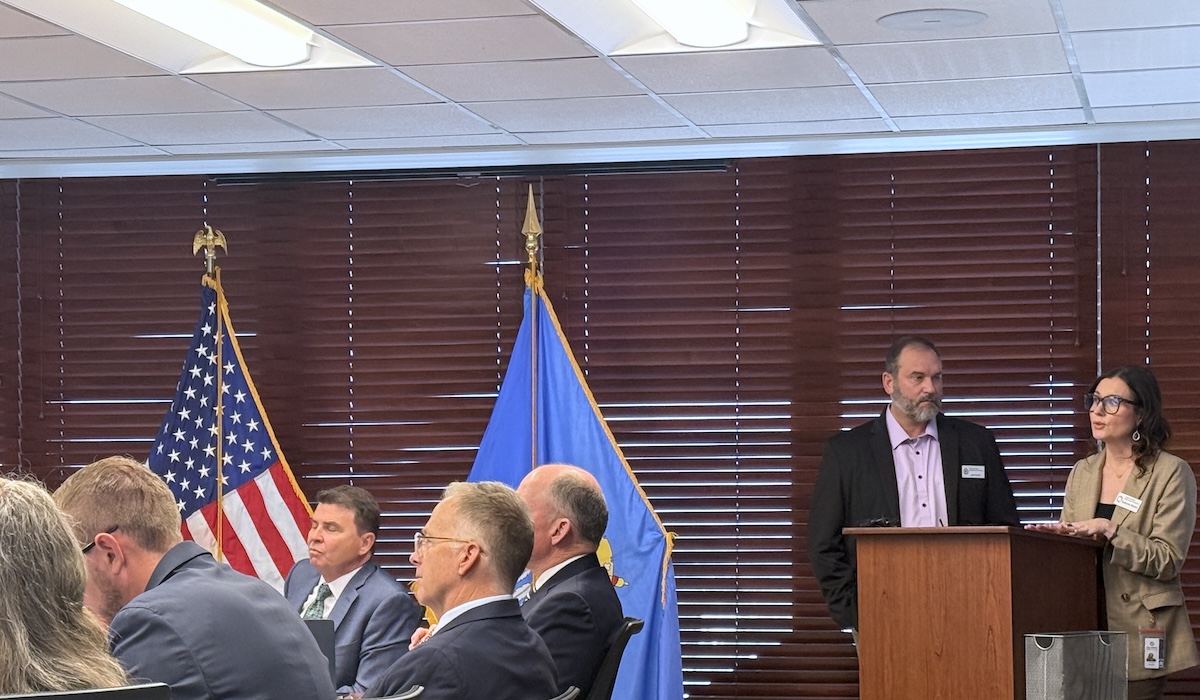
Efforts are ongoing throughout the state to train and retain teachers. Alongside data on teacher certifications, Oklahoma State Department of Education staff presented information at the July 23 meeting on three initiatives aimed at improving teacher quality and helping aspiring teachers obtain a traditional certificate.
TeachForwardOK is a two-year pilot program created by Senate Bill 212, which flew through the Senate in 2025 but faced some opposition in the House during its floor vote. It ultimately passed. Concluding its first year, the program is serving about 450 emergency certified teachers and aspiring teachers as they pursue a traditional certification, OSDE staff said.
The program involves partnership with six higher education institutions, and two different pathways are offered. At the University of Central Oklahoma, the University of Oklahoma, Oklahoma State University and Northeastern State University, emergency certified teachers can go through accelerated courses to obtain a traditional certificate. Meanwhile, Cameron University and Southwestern Oklahoma State University offer “apprenticeship-style” programs that allow “aspiring teachers and school employees to earn credentials while continuing to work.”
According to a joint press release by OSDE and the Office of Educational Quality and Accountability, OEQA is funding and managing the programs at UCO, SWOSU, OSU and Cameron, while OSDE funds the work at NSU and OU.
“These partnerships meet two of our three priorities at OSDE: improving teacher recruitment and retention, and creating career pathways,” Superintendent Lindel Fields said in the press release. “TeachForwardOK is proof that when individuals and organizations at all levels unite in the common cause of improving education in Oklahoma, we can have a positive impact on the entire system.”
Secretary of Education Dan Hamlin, who is departing Oklahoma this summer, said in the press release that the effort “represents an important step toward ensuring that teachers holding emergency certifications receive high-quality training at no cost.”
“This effort is a strong example of government-university collaboration in service of Oklahoma’s teachers, schools and students,” he said.
In an interview July 8, he was more candid.
“I think that is another huge initiative to kind of address the issue of having teachers who maybe have not had as much training as we would like them to have,” Hamlin said.
OEQA executive director Michelle Seybolt said the program is “about creating more opportunities for Oklahomans to become outstanding teachers without lowering our expectations for quality.”
Other efforts to address the teacher shortage and improve educator training are also underway.
Through the Oklahoma Educator Launch and Mentorship Initiative, 463 first- and second-year teachers are receiving a week of professional development — set to begin this week — and year-long mentorship from a retired teacher. The program had the capacity for 500 early-career teachers, but it did not receive that many applicants.
Autumn Kouba, OSDE’s senior director of teacher recruitment and retention, said the timing of the professional development may have dissuaded some applicants.
“There is also the issue of the time in the summer when the institute is provided. It is the very end of July. The school year is starting earlier. So induction programs with districts, they are also starting that week,” Kouba said. “This year was like, ‘Let’s get this out there, let’s provide it.’ Next year, if we have sustained funding, which we are hoping for, we can move those dates back to allow time for, you know, double dipping: They get the PD with us and the PD with their district.”
In an interview after the July 23 state board meeting, Fields said he was “super excited” for the new educator mentorship initiative.
“They will help nearly 500 first- and second-year teachers get exposed to high-quality training and have a mentor throughout the year,” Fields said. “I am convinced that, this time next year, we will be looking at data that says that program works and helps keep teachers. I think we have — it is not a recruitment problem, it is a retention problem, and programs like this are going to help with our teachers in Oklahoma.”
According to Kouba, 79 retired teachers are serving as mentors in the initiative. They will “provide monthly observation and coaching through May.” According to program guidance from OSDE, mentors receive $1,000 per mentee and can earn up to $10,000 with 10 mentees. New teacher participants can receive up to $2,500 by earning $1,500 for completing the “summer launch” and an additional $1,000 for completing the mentorship program.
Separately, some educators are also able to participate in the Grow Your Own Educator program, which is currently serving 125 participants in their pursuit of an education degree or the additional coursework necessary for a traditional certificate.