

(Update: On Tuesday, June 16, voters rejected State Question 832.)
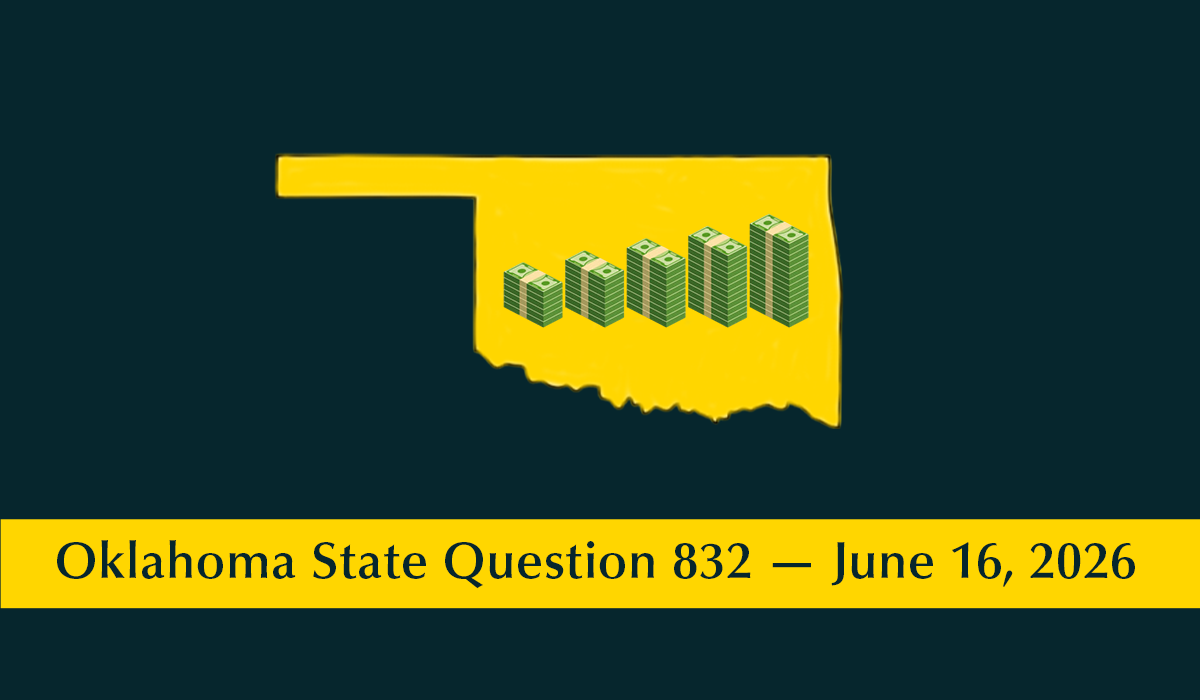
Oklahoma last raised its minimum wage in 2009, when it matched the new federal rate that took effect that year. While efforts to raise it since then have failed in the Oklahoma Legislature, this time around, the decision will be left to voters when State Question 832 appears on the June 16 ballot.
If passed, SQ 832 would raise the minimum wage gradually — to $12 in 2027 at first, then by $1.50 each year before topping out at $15 per hour in 2029, more than double the current rate of $7.25. After reaching $15 per hour, the rate would continue to increase in smaller increments over time. Beginning in 2030, the state’s minimum wage would increase annually based on the U.S. Department of Labor’s Consumer Price Index.
Polling released
On May 12, the firm CHS & Associates released polling from April 26-28 that estimates 51 percent support and 45 percent opposition to State Question 832.
Organizers in favor of raising the minimum wage began collecting signatures in 2024. Nearly 160,000 of the 180,000 signatures collected were verified by the Oklahoma Secretary of State’s Office, making it eligible for a ballot. Gov. Kevin Stitt irritated some supporters by deciding in September 2024 to delay placing it on a ballot until June 2026.
If SQ 832 passes, Oklahoma would follow neighboring Arkansas and Missouri in their 2018 and 2024 decisions to increase their minimum wages.
Those in favor argue that successful passage would mean an increase in the paychecks of an estimated 150,000 Oklahomans and offer many a better shot at keeping up with inflation. While Oklahoma’s cost of living is among the lowest in the country, the state has seen increases in housing, energy, insurance and food costs in recent years that have squeezed lower-income residents.
Those who oppose SQ 832 caution that it could place an added burden on employers, especially small businesses that are not equipped to absorb wage increases, while raising costs for consumers and risking a bump in the state’s unemployment rate.
If passed, wages could continue to rise with cost of living
After the ballot measure hits its specified ceiling of $15 by 2029, future increases would be tied to the Consumer Price Index. The CPI measures the average changes in consumer prices for things like food and energy across 30 major metropolitan areas. The index is compiled by the Federal Bureau of Labor Statistics.
Those opposed to State Question 832 fear it could bind increases to Oklahoma’s minimum wage with high-cost-of-living cities like New York or Seattle.
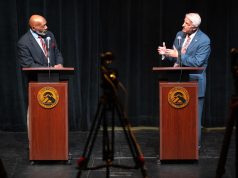
Speaking at an April 2026 League of Women Voters forum in Stillwater, Oklahoma Council for Public Affairs Vice President Dave Bond said tying future increases to other states doesn’t make sense.
“It’s about 30 different major U.S. cities, and it’s the ones most folks would typically think of, and Oklahoma City and Tulsa are just not on it,” he said. “It’s another example of how State Question 832 is not tied to the cost of living in Oklahoma. It’s tied to other things outside the state of Oklahoma. Politicians in those other places will make decisions that raise the cost of living in those other places, like Los Angeles and San Francisco.”
Speaking at the same forum, Oklahoma Policy Institute executive director Shiloh Kantz noted that, after the initial increases, future hikes would arrive in far smaller amounts — and that the CPI is already used by Oklahoma lawmakers to calculate other economic policies.
“CPI is a really normal thing to calculate the cost of living,” she said. “In fact, the Oklahoma Legislature uses it right now to calculate wages so that employers can get tax credits. And so this is not something that our Legislature is scared to use. And in states where we’ve seen a cost-of-living increase that has been tied to CPI, the 10-year average is about 22 cents per year. So, this is not a very scary thing.”
Kantz said the cost-of-living increases are necessary.
“A full-time worker earning minimum wage today has far less buying power than they did nearly two decades ago,” she said. “For many families, that means hard work alone isn’t going to make it happen. One in four jobs in Oklahoma pays a median wage below the poverty line for a family of four, which is $33,000. One in six of our kids lives in poverty. A minimum-wage worker has to work 93 hours a week to afford a one-bedroom apartment rental in Oklahoma. These are the economic realities Oklahoma parents and caregivers are living with.”
How other states have fared

Voters in Arkansas and Missouri have raised their state’s minimum wage in the last decade. Missouri’s jumped to $15 in January, up $1.25 from 2025. Approved in 2024, that increase followed smaller amounts over the last 10 years.
In Arkansas, a 2018 citizen-led initiative passed with 68.5 percent voter support to raise the minimum wage from $8.50 to $11 by 2021. It hasn’t increased since then.
State Question 832 proponents say outcomes in those states have been positive, but Oklahoma State Chamber Vice President Adam Maxey said it’s too soon to conclude how neighboring states have fared.
“Most in this general part of the country, the middle of the country, have only put it in place within the last five years or so,” Maxey said at the Stillwater forum. “Arkansas, Missouri and Nebraska (have raised their rate) only in the last five years or less. The states that have been doing it for longer, for a decade or two decades, I think those are the ones that we really have to look to. And how has it worked out there? How has it worked out in terms of jobs? Which direction are jobs going there? And which direction are prices going there? Most economists agree that, when you do this, it’s going to affect jobs, particularly at that low end of the pay scale. And it will also affect prices, as businesses, both big and small, have to make adjustments.”
Missouri’s unemployment rate was 3.9 percent in March, slightly lower than the national percentage. Arkansas’ rate stood at 4.4 percent in February, mirroring the national rate.
Bond points to California’s high minimum wage and consumer costs as evidence that minimum wage increases can depress the job market. That state’s unemployment rate is 5.3 percent, among the highest in the country.
The state recently passed a $20 minimum wage for fast food workers. An examination of the effects by the University of California, Santa Cruz found the measure led to a 25 percent increase in labor costs for employers and a 9 percent increase in the cost of menu items.
“Typically, it’s those at the lower end of the pay scale that are more at risk of losing their jobs,” Bond said. “The vast majority of economists agree that that’s the direction it tends to go. They sometimes disagree on how many jobs are lost. But it tends to go in that direction. And then on the price side, when those prices start to go up, you see what that looks like. The results today in California are that they have the highest unemployment of any state in the country.”
Yes on 832 campaign manager Amber England said comparisons between Oklahoma and California are not apples to apples, given the Golden State’s population of 40 million people to Oklahoma’s 4 million and California’s massive economy — even compared to other nations.
“I would just say that the state of California (…) is the fifth-largest economy in the world,” she said. “Trying to compare that to Oklahoma, it’s just silly. States around us that have raised their minimum wage, that look like Oklahoma — Missouri, Arkansas, New Mexico and Nebraska — have not seen massive job losses, have not seen the sky fall. This is a common-sense policy that sets a new floor for low-wage workers and provides them the opportunity to have a decent living so that they can go out to dinner, they can maybe help pay for their rent, their gas and their groceries.”
What increases could mean for small businesses
SQ 832 critics often cite the risk of an added burden on employers if the measure is passed. They also argue that most employers pay more than the minimum wage anyway, and forcing them to pay more could lead to limited job prospects down the road as businesses tighten budgets.
“Wages have been growing in the state of Oklahoma in the past decade at a better clip than those states that do a minimum wage like SQ 832 would do to Oklahoma’s minimum wage,” Maxey said. “That’s why, when you look at those states, all three of those states that have been doing minimum wage this way for a decade or more are top 10 in the country in unemployment. California, I wish they hadn’t put this minimum wage thing in there, but they did, so that’s an example — the biggest example we have. When you factor in everything that a household has to deal with, they have the highest poverty of any state in the country.”
Current statutory language contains some protections for select small businesses. Of the positions or organizations exempted from the state question’s proposed changes, “employers with 10 or fewer employees and grossing $100,000 or less” would “remain excluded from the [Oklahoma Minimum Wage Act’s] coverage,” according to the ballot measure.
England said the Raise the Wage campaign has had no trouble finding small business owners who are supporting SQ 832. In her view, that’s evidence that employers are willing to pay more, which she said could help employers retain valued employees.
“I think that business owners in Oklahoma want to pay their workers well,” she said. “They want to pay their workers to keep them happy, and it’s also why over 100 small businesses right now have signed up and taken a pledge to support raising the minimum wage. Because they understand that when they pay their employees more, they are more satisfied and their turnover rate goes down.”
(Correction: This story was updated Wednesday, May 13, 2026, at 10:42 a.m. to correct the minimum wage value that would go into effect in 2027 if State Question 832 is passed.)