

(Update: On Tuesday, June 16, Sen. Ally Seifried won election to represent Senate District 2.)
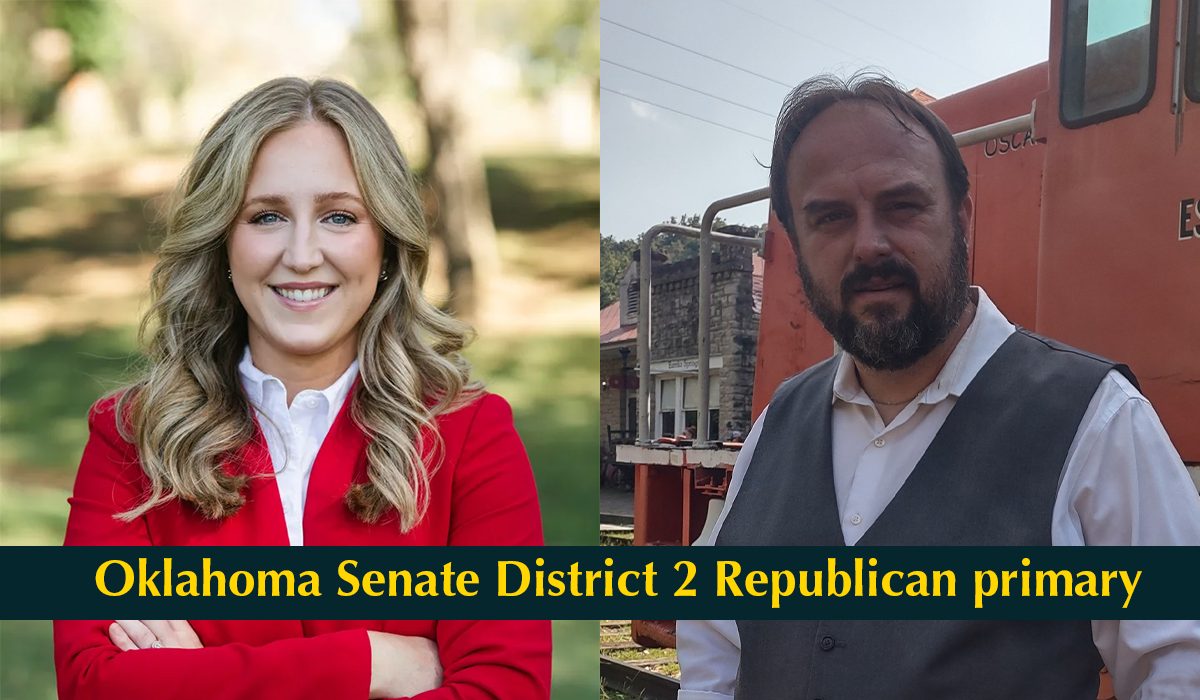
Senate District 2 voters in the Rogers County area will decide between incumbent Sen. Ally Seifried, a ninth-generation Oklahoman, and construction professional Payton Pepin in Tuesday’s Republican primary.
The race is one of several Senate primary contests featuring an influential incumbent aligned with Senate leadership challenged from their right by an opponent pledging to refuse special interest and lobbyist contributions. Asked about the dynamics of the race and the potential for shakeups to Senate power, Seifried (R-Claremore) said she remains focused on talking to constituents.
“The only thing I am worried about is getting on the doorsteps, talking to my constituents, making sure that we are in alignment — which I think we are — and representing their values and getting things done in Oklahoma City,” Seifried said. “All that other noise is just second nature. I care about representing my hometown and just doing a good job and passing conservative policies for the people in Tulsa and Rogers County.”
Seifried defined “conservative values” in the area as parental empowerment in education, low taxes, good transportation infrastructure and family values.
Asked how he defines such values, political newcomer Pepin took the opportunity to critique Seifried’s voting record and echoed talking points that have defined the criticism lodged for months at Senate leadership by the 10 or so members of the Freedom Caucus — a hardline conservative segment of Republican politics with chapters across the country.
“There are certain pieces of legislation that she has refused to vote for,” Pepin said. “There was a bill that basically would have made it illegal for — it would require illegal immigrants to show immigration status before they collect welfare benefits for their children, get (…) Medicaid, SNAP benefits. People are just showing up here, and they are able to collect benefits for their kids. [The Freedom Caucus] tried to get that to the floor, and what we have seen every year is that good bills die in committee or they do not — they never make it to the floor because our quote, unquote, conservative lawmakers do not want to go on the record.”
Pepin steered away from being labeled a Freedom Caucus candidate, instead calling himself as a “constitutional conservative.” He also explained his decision to refuse certain contributions.
“Once you start taking a bunch of lobbyist money from special interest groups, you represent them. You are not representing the constituents anymore,” Pepin said during his May 27 interview. “They expect something in return for their money, and they are going to get it, or they are going to vote you out.”
Minutes later, Pepin offered a seemingly paraphrased quote from an unexpected source, tying it into his reasons for running and the problems he perceives.
“I think it was (Benito) Mussolini that said, ‘When big business and government collude together, that is fascism,'” Pepin said.
Asked about Pepin’s anti-PAC and lobbyist donation pledge, Seifried said she cannot speak to his motives.
“I think whenever you receive money, it is them signing onto you, not you signing onto them. And so if you cannot turn around and then vote against their priorities or have a tough conversation, I do not think you belong in the Legislature,” Seifried said. “But the fact of the matter is, campaigns cost a lot of money, and if you want to get your message out, then you have to also fundraise. But I am really, really proud of my fundraising dollars in district. I have many, many, many donors within Rogers County and Tulsa County. I have got local support, and so I make sure to balance that and make sure that it is not lopsided in one or the other.”
To that end, Pepin has received $5,475 throughout his campaign, according to his pre-primary report. All of his donations are from individuals, including a $160 anonymous donation. State ethics rules recently changed to allow anonymous contributions up to $200. Meanwhile, Seifried has received about $245,700, with the bulk of those funds from her previous committee — $119,675.90 — while raising an additional $75,595 in this year’s race from individual donors and about $50,000 from political action committees.
A key part of Pepin’s campaign is his belief that Seifried has become unreachable, something he said partially inspired him to run.
“I was not seeing the representatives really come and talk to the people. You know, there’s a few, like Mark Lepak and Tom Gann, but we never saw Rusty Cornwell, or we never would see Ally Seifried,” Pepin said. “So when we would ask her about things — or trying to get her to touch base with us — you never could get a call back. (…) It just seems like a lot of the politicians are not representing us anymore. They are representing the special interest that helped (them) get elected.”
While Seifried shied away from direct questions about Pepin’s campaign strategies or his critique of her accessibility, she said she stays in touch with constituents.
“I have a really open line of communication with my district, and I think I have done a good job of responding to things that they have brought up and finding answers for them. And there is obviously still work that I want to do,” Seifried said.
SD 2 is mostly located in Rogers County — with a sliver in Tulsa County — and includes Claremore, Verdigis, Catoosa and surrounding areas.
The winner of the Republican primary June 16 will face Democrat Randy Cowling in the November general election.
Seifried ‘proud’ of work, Pepin critiques record
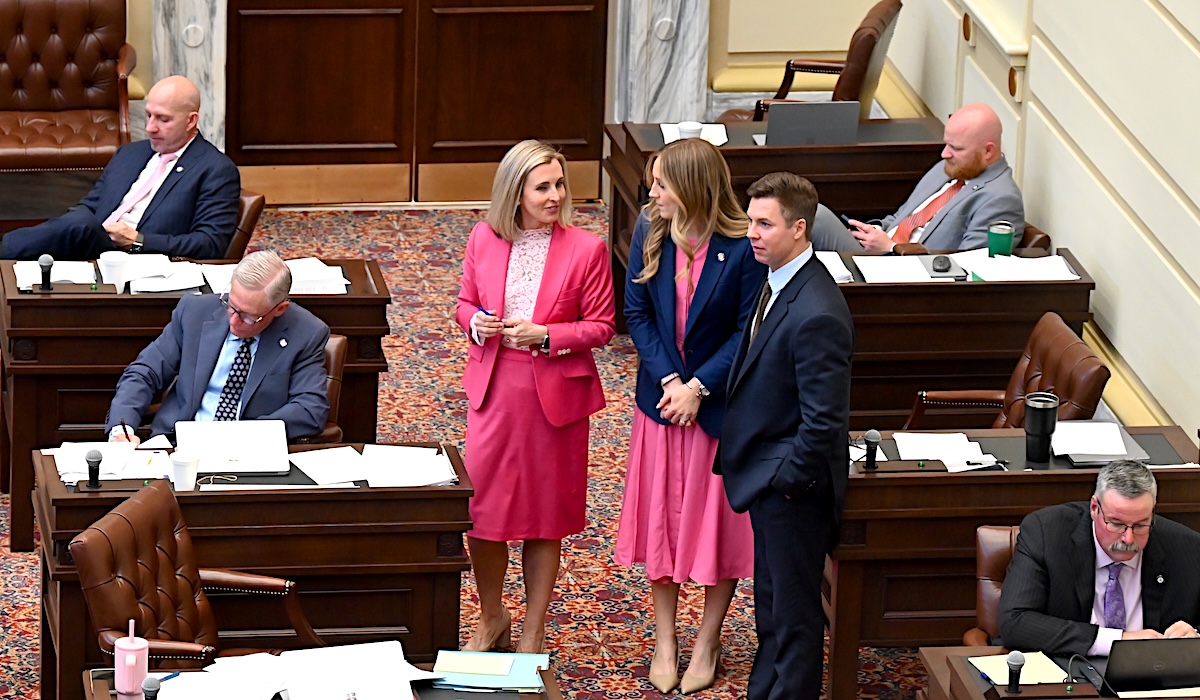
First elected four years ago, Seifried pointed to several issues she has heard about during conversations with constituents about what to prioritize if she is reelected.
During her first term, she said education and cost of living have risen to the top of her concerns. She noted that she supported the Legislature’s elimination of the state sales tax on groceries, and she pointed to the pending state question lawmakers put forward for the November ballot that would lower the cap on property tax bills.
“We voted on a measure to try to curb the growth of property taxes so that the growth is capped at a lower percentage. I think we will continue to work on that,” Seifried said.
Seifried, who serves as the vice chairwoman of the Senate Education Committee, helped spearhead numeracy efforts during the most recent session, and she has indicated that she hopes to continue the conversation moving forward. She also said she has become “passionate” about trying to move school board elections to November, a proposal that has filtered out of gubernatorial conversations in recent weeks.
“Your school board really has so much more control over schools than the state does, but we have such little turnout that I think sometimes we will have votes of (200) and 300 people for large districts,” Seifried said. “And so I think when you are spending taxpayer money, you need to make sure that the taxpayers’ voices are heard, and most people know we vote in November, but they are not quite as tuned in maybe in April. So that is something I am working on, but I have not been able to get across the finish line.”
Conversations about moving school board elections to November occasionally feature suggestions that such positions should be partisan. Seifried declined to take a stance on whether school board members should be forced to run with a political party designation, instead opting to take an incremental approach.
“I am having a difficult time enough getting the House to pass even just moving the school board elections to November,” Seifried said. “So I will take it one step at a time. But for me, again, voter turnout is the most important thing, and I think that they should be moved to November and then people can decide.”
Pepin and Seifried share some of the same priorities, with both hoping to lower property taxes. On Pepin’s website, he also lists the defense of “Oklahoma sovereignty,” fighting “for the values of working people” and ending “the green new scam” as his top promises.
“(Being) a firewall against government invading the daily lives of our families with high taxes, bureaucracy and overregulation,” Pepin’s website states under “fight for the values of working people.”
He also promises to “stop allowing our tax dollars to be used to fund green energy projects” and stop foreign ownership of land.
While Pepin has his priorities, he also has gripes with some legislation that Seifried supported. His website lists four bills in particular:
- SB 713, which allows county bonds to be used for acquiring and installing light mitigation technology on wind energy facilities that were active before Jan. 1, 2026;
- HB 2110, which created a pilot program revolving fund to provide incentive rebates to film sitcoms in Oklahoma;
- SB 224, which would have created the Oklahoma Education and Workforce Efficiency Data System to provide access to data on early childhood through secondary education, workforce training and employment outcomes; and
- SB 1129, which created a $500,000 grant program to provide school districts with funding to purchase storage for student cell phones to facilitate the bell-to-bell cell phone ban that Seifried carried, promoted and ultimately helped pass into law.
Pepin’s website also criticizes the lack of a Senate Education Committee hearing for HB 2197, which would have prohibited public research universities in Oklahoma from requiring in-state students to purchase a meal plan as a condition of enrollment or on-campus housing.
On SB 1129 in particular, Seifried said she previously explained her decision to vote in favor of the bill to Pepin.
“I explained this to him the one time that we met. My bill requires no funding. And so, Senate Bill 139 was a one-year, sort of trial period to remove cell phones from classrooms,” Seifried said, referring to one of her top legislative accomplishments. “There was a pilot program that was a result of some budget negotiations between the House and Senate that I was not a part of. And so, I think that some people wanted to have $500,000 for a one-time fund to allow schools that they wanted to buy pouches to do that. And so that was just two completely separate issues.”
But Pepin says his concern with Seifried helping lead the Senate Education Committee is deeper than one issue.
“The problem that I have with her in education is this: She is 30-something years old, right? She did not go to public school, right? And she has no children. But she is going to fix the public education system,” he said. “What the hell does she know about public education? You know what I mean? I have had seven kids, five of them are in public education. I went to public school.”
In terms of economic development, Seifried also said she would not support wind turbines in her district, owing to a “gamut” of concerns such as property values and Northeast Oklahoma’s aesthetic and culture. She also said she supports legislation requiring certain setbacks for wind turbines.
“I have been a strong proponent for several years on setbacks protecting residents and homes,” Seifried said. “I think that is a really fair conversation, especially as Northeastern Oklahoma is known as Green Country. We are a lot more populated, we have got more trees, we have got more hills and so we have a different terrain to take into effect (and) the wind turbines that are being looked at are, I think, double the size of those in Western Oklahoma. So I am very skeptical of these, and I have been trying to push for setbacks for several years now.”
When legislative leaders held a vote on SB 2‘s proposed wind farm setbacks on the final day of this year’s session, however, Seifried voted against it, joining a combination of Freedom Caucus Republicans who believed the bill didn’t go far enough and pro-renewable energy Democrats who believed it went too far. Although SB 2 passed the Senate, it failed 20-67 in the House with similar bipartisan opposition.
Pepin, meanwhile, believes his background makes him better positioned to address economic development questions, including data centers, which have drawn major companies to scout the area.
“They look at Oklahoma like it is an untapped resource of wealth. And they come down here, and they basically rip us off, you know, they do it through our crooked politicians,” Pepin said. “I worked for a construction company that built windmills, right? My degree was in construction management, but part of that was green energy. That was going to be the wave of the future, right? When you look at that stuff, you go, how the hell does a windmill make sense? It increases your electricity cost by about 500 percent. Why the hell would I ever build one? My boss said — I will never forget this — he said, ‘Well, you know they are 100 percent subsidized by the federal government, they get all kinds of property tax rebates, to get this, this and this.’ And so as long as that turbine turns, it is pure energy for the energy company. And I said, ‘So basically, we are engaged in a giant money laundering scheme against the taxpayer.’ He said, ‘You are going to do really well here, son.'”
As she seeks a second term in SD 2, Seifried said she does not look back on nor regret past votes, a mindset she chalked up to her experience as an athlete. Seifried played collegiate basketball at Rogers State University.
“I am really proud of the promises that I have delivered in the last four years,” Seifried said. “Specifically, (I) ran on school choice and empowering parents, and I was proud to pass a parental choice tax credit (in) my first year. I also campaigned on removing the grocery sales tax, which we delivered as well.”