

(Update: Brent Swadley’s formal sentencing was put on hold Wednesday, July 22, as his legal team moved to have Oklahoma County District Court Judge Susan Stallings recuse from the case. That process is expected to take months, meaning Swadley is set to remain in the Grady County Jail during the interim. The following article remains in its original form.)
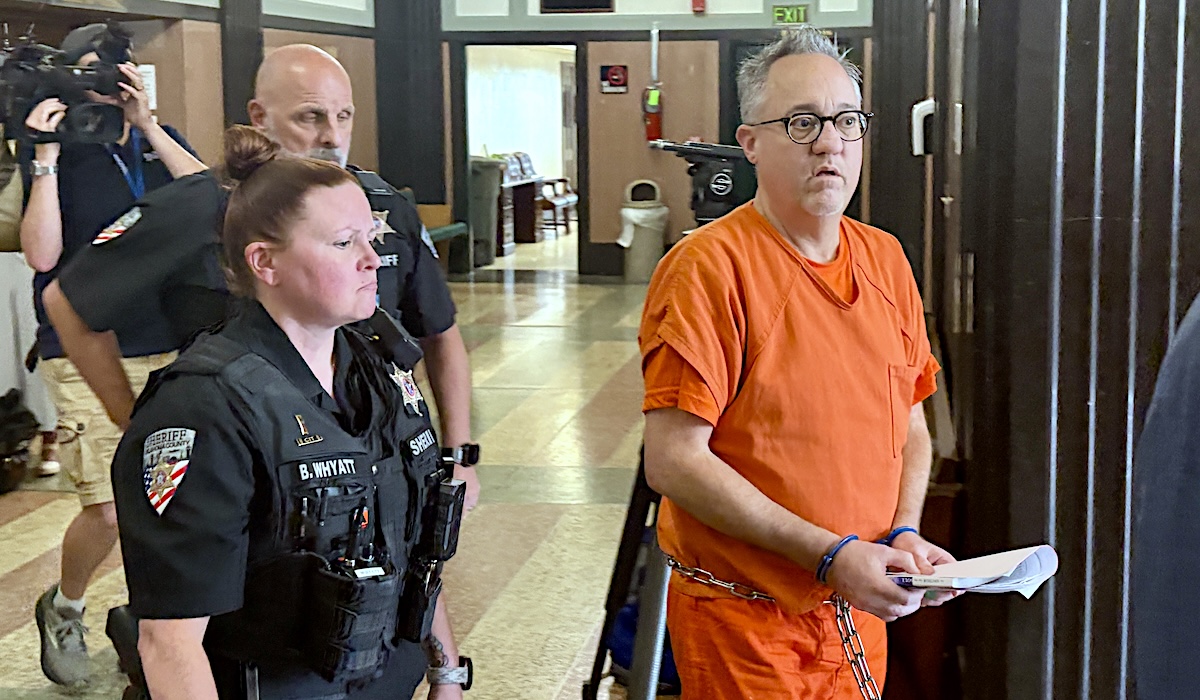
Convicted felon Brent Swadley will remain in jail while his appeal plays out after Oklahoma County District Court Judge Susan Stallings denied a bond request argued during a full day of hearings Thursday.
Stallings also quashed Swadley’s requests for injunctive relief over phone calls between Swadley and his defense attorneys that have been released publicly by the Attorney General’s Office. Swadley’s attorneys argued that the calls had been used unfairly by prosecutors to gain insight into Swadley’s plans for his appeal.
The restaurateur’s lone victory Thursday was to delay his formal sentencing until July 22.
A jury convicted Swadley on May 28 for a charge of conspiracy to defraud the state and five counts of false or fraudulent claims against the state and recommended a 10-year sentence, plus a $75,000 fine. Swadley did not take the witness stand during his trial.
Swadley has been behind bars since, except for a trip to the hospital June 8 after he lost part of a finger that was caught in a cell door during an interaction with a guard at the Oklahoma County Jail. Swadley has since been moved to the Grady County Jail for his own protection, according to Stallings, who addressed the issue at the top of Thursday’s court proceedings. The decision was made by Oklahoma County Jail officials, she said.
Health issues outlined by former Swadley doctor
Swadley pinned most of his hopes for an appeal bond on his physical health. Swadley has been diagnosed with diabetes, high blood pressure and Stage 3 kidney disease, according to Dr. Dean Brown, who told the court he had treated Swadley for about 15 years before his retirement July 1.
Brown said he last saw Swadley in April and had been in the process of referring him to a kidney specialist before his trial began May 18. Questioned by defense attorney Robert Don Gifford, Brown told the court he was surprised Swadley’s kidney function had declined as much as it had during that April visit and that Swadley would be at continued risk for declining renal function in the future, even with an array of medications aimed at helping him manage the disease.
However, Brown appeared to undermine his former patient’s appeal bond motion slightly during questioning by Assistant Attorney General Gayland Gieger. Brown told the court it was understood that, after some initial problems, he had verified Swadley was now receiving the diabetes and kidney medications prescribed to him while in jail. He said he was unable to verify if Swadley was receiving medication to manage his blood pressure.
Gifford also argued that Swadley has been a model citizen while in jail. He presented to the court more than 40 letters attesting to Swadley’s personal character. Gifford told the court that, if released, Swadley would be better suited to pay restitution to the state and would be able to address his health concerns at his own expense, rather than the state’s. Gifford said Swadley was a non-violent offender who did not pose a flight risk because of his extensive ties to the community, including his restaurant and catering business that employs more than 500 people.
Gifford said that, in effect, Swadley was being punished for going to trial while co-defendants Curtis Breuklander and Timothy Hooper took plea deals in exchange for testifying against him. Gifford said Swadley was no more guilty than those two men, and both had been granted bond while awaiting trial. Gifford also cited several other recent white-collar crimes where defendants were granted bond.
Swadley has also been threatened with physical harm and has been extorted while in jail, according to Gifford. He said numerous fellow inmates have made requests of Swadley to pay for commissary items because they know who he is and that he is wealthy.
“By any measure, Mr. Swadley should be eligible for an appeal bond. He meets the standard,” Gifford told the court. “He will be better able to manage his business, which will make it easier for him to pay restitution for the state, and to keep people employed, and it will also allow him to better manage his health before entering state custody and at his own expense rather than the state’s expense.”
But Gieger tried to punch holes in that characterization, telling Stallings that Swadley had been involved in a physical altercation with a hotel worker in Antigua during a vacation, which he said resulted in Swadley’s arrest.
Gifford pushed back, arguing that Swadley was never arrested in Antigua and that the issue with the hotel worker stemmed from an attempt to extort his client.
Gieger also argued that, in March, Swadley left the country on a family vacation to Europe without informing some of his own defense attorneys, the court or prosecutors. In what became a heated back-and-forth between the two attorneys, Gifford told the court that Swadley was under no travel restrictions at the time of his trip to Europe in March.
Stallings said she excused Swadley from a pre-trial hearing because she was informed by his counsel that he was out of the country and would not be attending.
Gieger also referenced a 2018 video of Swadley speaking at a religious conference during which he extolled the value of doing things your own way, even if it means eschewing regulations.
“I bootlegged barbecue,” Swadley said during the now-deleted 2018 recording. “I wouldn’t be where I’m at today if I followed by the rules and satisfied all the permits and all the legalities and stuff out there. Sometimes you’ve just got to go out there and do it and don’t worry about it.”
Gieger referenced Swadley’s eight-day trial this May when prosecutors successfully argued that Swadley had little regard for rules and regulations when it came to his business relationship with the state.
“Doesn’t that sound familiar?” Gieger asked.
In the end, Stallings was unmoved by Swadley’s arguments, telling his attorneys that they did not meet the burden of proving he was eligible for bond while his appeal works its way through the system.
Phone calls take center stage
Swadley’s jail phone calls with attorneys, which were released to the media, also became a focal point of Thursday’s hearings.
On July 2, Gifford filed an application for injunctive relief on behalf of Swadley over the state’s release of phone calls with his attorneys. In the court filing, Gifford said the state has been “surreptitiously recording” Swadley since he was booked into the Oklahoma County Jail in late May.
In the state’s response, Assistant Attorney General Gayland Gieger denied listening to calls between Swadley and his attorneys.
“As interns and/or attorneys for the state reviewed the defendant’s calls, despite the said notifications and procedure for attorneys, counsel for the defendant, including Peter Scimeca, participated in recorded calls with the defendant,” Gieger wrote. “When counsel for the defendant was identified as a participant on the call, the state immediately stopped its review of that call. Therefore, while the jail’s phone system may document a call from Mr. Scimeca or another attorney of record herein was accessed by the state, none of those calls were reviewed or listened to by the state’s attorneys beyond identification of the participating party who was provided the verbal notification on the call as referenced above.”
Assistant Attorney General Jimmy Harmon said Thursday that Swadley’s defense team was “inept” if they didn’t understand that any call he received or made while in jail was subject to recording.
The state also argued that Swadley’s defense team and publicist were attempting to divert attention away from his felony conviction.
Defense attorney Christina Vitale told the court that prosecutors had violated Swadley’s Sixth Ammendment rights by listening to the calls and by not providing guidelines to interns tasked with the job of listening to the recordings. As a result, she said Swadley can no longer talk with attorneys by phone and instead is limited to in-person meetings nearly an hour away from Oklahoma City. Swadley’s attorneys told the court that Gieger had directed interns to find something “juicy and political” ahead of his bond appeal and sentencing.
“This has had a chilling effect on Mr. Swadley’s Sixth Amendment rights,” Vitale told the court.
Vitale requested an evidentiary hearing during which she said she planned to question Oklahoma County Jail staff and put Gieger on the witness stand.
But in denying the defense’s request for injunctive relief, Stallings said Vitale and Gifford had not demonstrated that Swadley’s constitutional rights had been prejudiced. Ultimately, she said the burden of defending his privacy when it comes to conversations with attorneys fell on Swadley himself and that a recorded announcement made at the beginning of the calls clearly says they are subject to recording.
With his appeal bond denied, Swadley was given the option of returning to the Grady County Jail or being transferred back to the Oklahoma County Jail. Gifford quickly requested that he be sent to Grady County.
In his appearance on Thursday, Swadley looked thinner than his May 28 appearance and had a bandage over one of his finger tips.
In a statement, Swadley’s representatives said the disputed phone calls should be a concern for everyone.
“While we are disappointed in the judge’s ruling today, we will continue to pursue all legal remedies on behalf of Mr. Swadley,” family spokeswoman Lisa Liebl said. “The hearing today exposed serious concerns regarding the handling of attorney-client communications and that’s something that should concern every fair-minded Oklahoman.”