
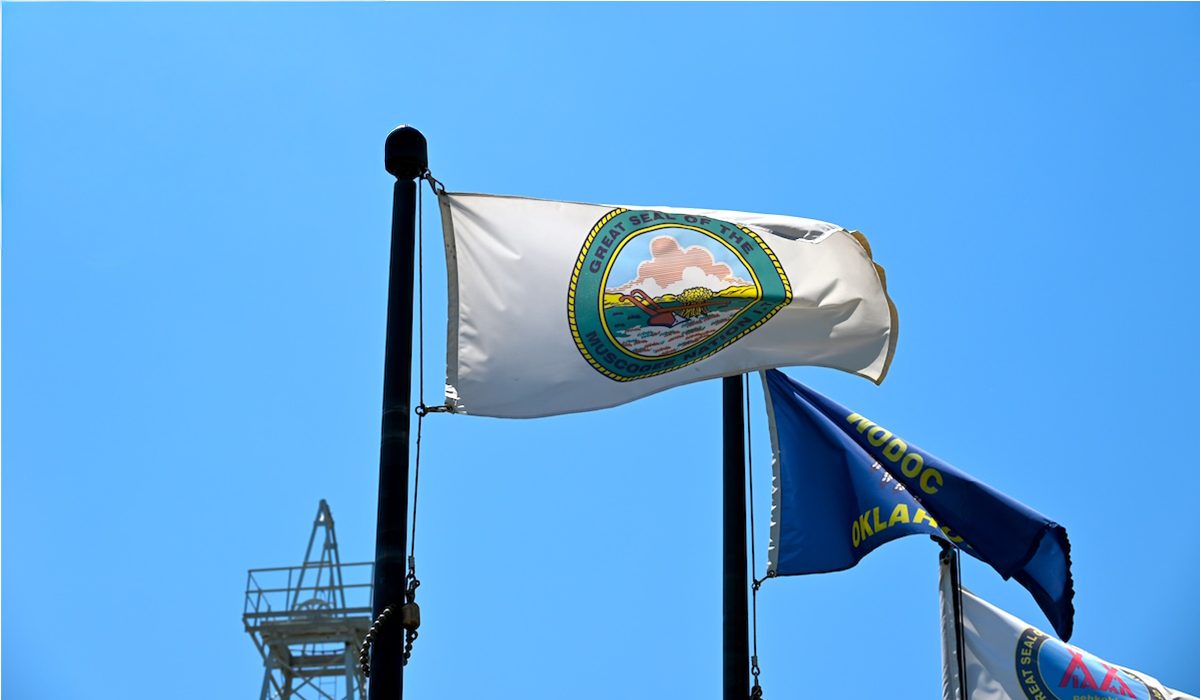

The approximately 18,106 registered voters of the Muscogee Nation are eligible to vote on four constitutional amendments Saturday, May 30, including a special justice appointment proposal, term limits and the removal of “(Creek)” from the nation’s laws. The election comes after the Muscogee Nation Supreme Court denied a request to stay it until descendants of Muscogee Freedmen are enrolled as tribal citizens.
The first amendment on the ballot, NCA 26-060, would replace all mentions of the word “Muscogee” in the nation’s constitution with the traditional spelling “Mvskoke” and delete the phrase “(Creek).” The amendment is largely symbolic and does not have a substantive effect, but it aligns with Indigenous movements to preserve traditional language within tribal law.
The second amendment, NCA 26-061, would allow the Muscogee Nation principal chief, currently David Hill, to appoint special justices to the Muscogee Supreme Court when a justice recuses from a case. The special justices would have to be approved by the Muscogee National Council and would serve for the duration of a single case.
The proposed amendment does not include a separate provision for if the principal chief is a party to, or has an interest in, a case, which could create a conflict of interest if justices recuse in a case involving the chief.
The amendment mirrors a special judge law passed by the National Council last year but struck down by the nation’s Supreme Court, a process that unfolded during the Muscogee Freedmen litigation that required the appointment of additional justices for the case. As a result, that proposed amendment is likely the most controversial one posed to voters, with some arguing that it is ripe for political abuse.
“If this passes, it opens up an avenue for the administration and/or the legislative branch to influence outcomes of specific cases because you would be loading the court with specific people for specific cases instead of appointing a justice based on their own merits,” Rep. Dode Barnett said, according to Mvskoke Media.
The third amendment on the May 30 ballot, NCA 26-062, would allow the principal chief to set a special election to coincide with a general election if an amendment’s ordinance is passed “at least 90 days prior to a general election.” The change is largely procedural and makes it easier to set special elections to coincide with general elections.
The final amendment on the ballot, NCA 26-063, would create term limits for Muscogee National Council representatives. The amendment would limit council representatives to serving three full four-year terms on the council. The amendment would begin counting terms starting in 2028. The 12-year limit would largely mirror term limits that exist for the Oklahoma Legislature.
While impossible to litigate until after someone reaches the term limit in 2040, the amendment’s wording could potentially allow term-limited representatives to be eligible to run in future special elections.
Early voting is set for May 27 and 28 from 7 a.m. to 7 p.m. at the Eufaula, Okemah, Okmulgee and Tulsa Indian Communities. Polls are open from 7 a.m. to 7 p.m. on Election Day — Saturday, May 30.