

Exactly one year after the Muscogee Nation Supreme Court ruled that Creek Freedmen are entitled to tribal citizenship, plaintiffs Rhonda Grayson and Jeff Kennedy filed a lawsuit against Principal Chief David Hill in federal court Thursday, with their attorney revealing Hill has refused to meet with them for more than three years.
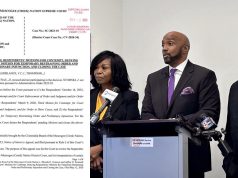
Grayson and Kennedy filed their suit in the U.S. District Court for the Western District of Oklahoma against Hill, the Muscogee (Creek) Nation Citizenship Board and its five individual members. The complaint seeks only declaratory and injunctive relief, asking a federal judge to force the board to issue the citizenship cards the tribe’s Supreme Court ordered a year ago.
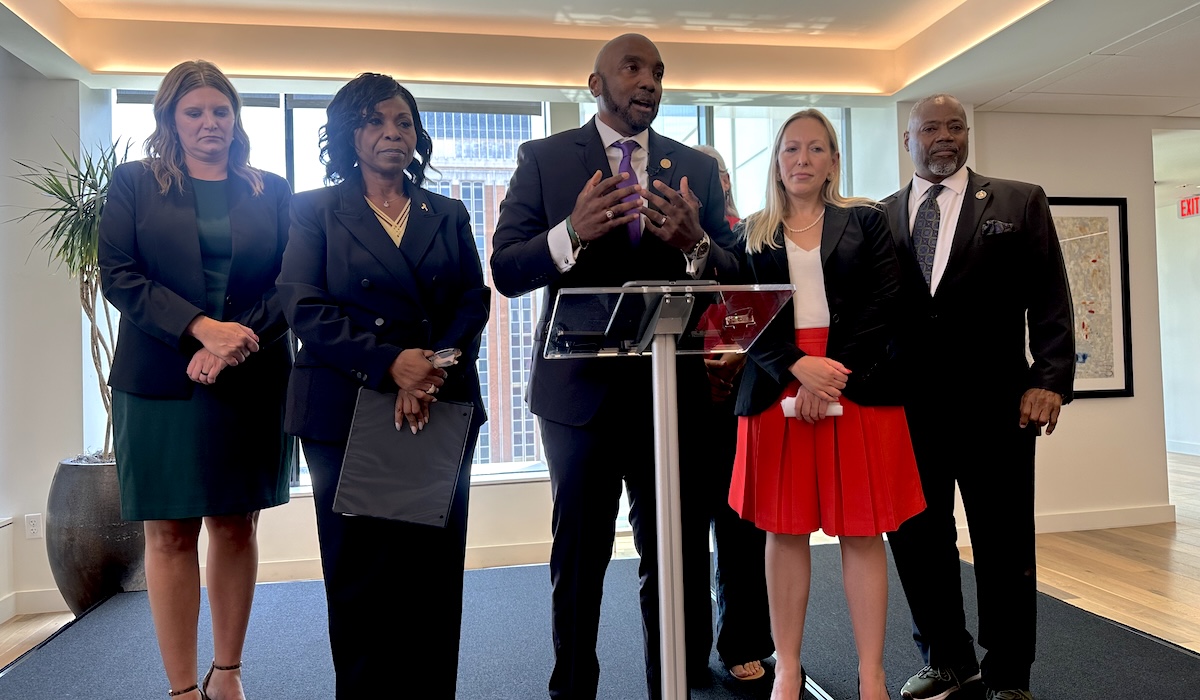
“Just from a personal standpoint, this has been our Trail of Tears. We call it the modern-day Trail of Tears,” Kennedy said Thursday during an Oklahoma City press conference announcing the filing.
Damario Solomon-Simmons, founder of the Justice for Greenwood Foundation and an attorney representing Grayson and Kennedy, said Hill has refused to meet with them at all — by phone, letter, email or though his own attorneys — for the past three to four years. Solomon-Simmons said that has included refusing outreach attempts through other tribal leaders and state lawmakers, such as Choctaw citizen and vice chairman of the Oklahoma Democratic Party Rep. Ronald Stewart (D-Tulsa).
“We have said to the chief repeatedly: We don’t want this fight,” Solomon-Simmons said. “We’re one people. Let’s come together and be a strong Creek Nation like we were before 1979. He has rejected that.”
Solomon-Simmons argued there is nothing left for the tribe to do administratively that prevents enrollment of Freedmen, who are the descendants of slaves owned by some Muscogee ancestors.
Grayson, Kennedy and roughly 2,000 other Muscogee Freedmen have already gone through the nation’s existing citizenship process, Solomon-Simmons said, and the Treaty of 1866 requires they be treated the same as any other Muscogee citizen. He pointed to the Cherokee Nation, which resolved its own “by blood” dispute simply by striking the provision from its constitution after court order.
Grayson, president of the Muscogee Creek Indian Freedmen Band, said the yearlong delay compounds harm that has already been ruled unlawful by the tribe’s own judicial branch.
“Every day of noncompliance is another day that Black Creek Freedmen are denied our birthright and our very identity as citizens — a denial that the Supreme Court has already declared unlawful,” she said.
Without citizenship cards, the complaint states, Grayson and Kennedy have been unable to vote in two tribal elections since the Muscogee Nation Supreme Court’s ruling — including a May 30 special election that included a constitutional amendment expanding the chief’s power to appoint special justices.
Co-counsel Lauren Briggerman, of Squire Patton Boggs, said the request made by her clients in Thursday’s new federal court filing is narrow: a citizenship card and the rights that come with it.
“All we are asking for today is that the court give these individuals what they are entitled to, including the right to vote,” she said.
Kennedy said he is ready for the multi-generational fight to be over.
“We just want to come home,” he said.
Grayson said she remains hopeful the federal court will side in their favor.
“Creek Freedmen belong. Black Creeks belong,” she said. “We are citizens of the Muscogee Nation.”
Hill: ‘Nation’s own governmental institutions’ should handle issue
The Muscogee Nation Supreme Court ruled unanimously July 23, 2025, that Muscogee Freedmen — descendants of people of African descent enslaved by Muscogee citizens before the Civil War — are entitled to full citizenship under the tribe’s 1866 Treaty with the United States, making the Muscogee Nation the second of the Five Tribes to recognize full Freedmen citizenship after the Cherokee Nation did so in 2017.
The ruling struck the nation’s “by blood” citizenship requirement — adopted in a 1979 constitutional vote that excluded Freedmen descendants — as unlawful and void from the start.
In the immediate aftermath of the 2025 ruling, Hill said his administration was reviewing the order and might seek reconsideration “to ensure that we move forward in a legal, constitutional manner.” No citizenship cards were issued to Freedmen applicants. The day Grayson and Kennedy’s attorneys filed their first motion for contempt last August, Hill issued an executive order directing the citizenship board not to issue any cards until tribal law and policy were “fully reviewed and amended.”
Two more contempt motions and a bid to halt the May 30 special election followed, but each was denied by the Muscogee Nation Supreme Court. On May 12, justices closed the case, finding that enforcement of their own ruling was a “political question” outside their authority and writing that the matter would be left “at the doorstep of the political branches of government.” The Muscogee National Council, meanwhile, passed a no-confidence resolution in April targeting the justices who had decided the case in Grayson and Kennedy’s favor.
On Thursday, Hill issued a statement following Grayson and Kennedy’s press conference.
“We are committed to ensuring that the Muscogee Nation’s Constitution and laws are followed fairly and consistently. Getting policies right is always more important than getting them done quickly. Anything less would undermine the integrity of our governmental processes and the rights of our citizens,” Hill said. “We are aware of today’s press conference regarding the lawsuit. However, the Muscogee Nation has not yet been served with the complaint. Once we have been served and have had an opportunity to review the filing, we will respond through the appropriate legal process; however, we would point out that federal law and precedent is clear that matters of Muscogee Nation law and governance are to be addressed through the nation’s own governmental institutions.”
At Thursday’s press conference, attorney Brenda Golden, an enrolled Muscogee citizen and prominent tribal sovereignty advocate, said the 1979 vote stripped citizenship from people who had spent their lives believing they belonged.
“Now imagine, all your life you’ve been growing up knowing that you were Creek. You were a citizen. You were on the rolls,” Golden said. “And then one day, you wake up, and it’s stripped away.”
Golden also suggested irony in the nation’s recent celebration of the McGirt v. Oklahoma U.S. Supreme Court decision anniversary, because that case affirmed the tribe’s reservation by citing the same Treaty of 1866.
“We celebrated a treaty last week and yet still won’t recognize our brothers and sisters that walked on the Trail of Tears with us,” she said.
Grayson said accepting tens of thousands of new citizens into the tribe would boost its strength. Federal benefits like health care are allocated based on enrollment numbers, she said, meaning more citizens would bring more funding into the tribe. She also pointed to the professional skills new citizens would bring.
“You have people with specialized skills that can come in and bring (value) to the nation,” Grayson said. “I think it’s a win-win for the nation.”
But even the production of citizenship cards would not resolve every open question about Muscogee Freedmen enrollment.
Federal courts still require documented “Indian blood,” not just tribal citizenship, to classify someone as “Indian” for criminal jurisdiction purposes — a distinction written into a recent Muscogee Nation-Tulsa settlement agreement that left even enrolled Cherokee Freedmen without documented Indian ancestry subject to state and city courts rather than tribal ones. The settlement agreement was recently tossed by the Oklahoma Supreme Court for failing to follow proper approval procedures under state law, but it highlighted the complex nature of Indian status as a political classification.